Portfolio Of Experience
Projects where learning and engagement meet experience design
Branching Simulations for Real-World Practice
I design branching e-learning simulations to let learners practice decision-making in risk-free environments. This project used situational judgment scenarios (e.g., gym member conflicts) to build confidence in applying policies without the pressure and formality of "passing a test."
Replaces uncertainty with measurable engagement: trainers practice standards in risk-free simulations, so the owner knows that their expectations are set for real-world challenges.
Methods:
- AI-driven characters to simulate real member interactions.
- Non-linear decision trees with immediate feedback.
- Dynamic variables to track progress and mimic unpredictability.
Tools:
- Adobe Captivate (branching, SCORM)
- Canva + AI (character design)
- Theory: Experiential Learning (Kolb)
.png)
.png)
Measuring Learning with SCORM & Quizzes
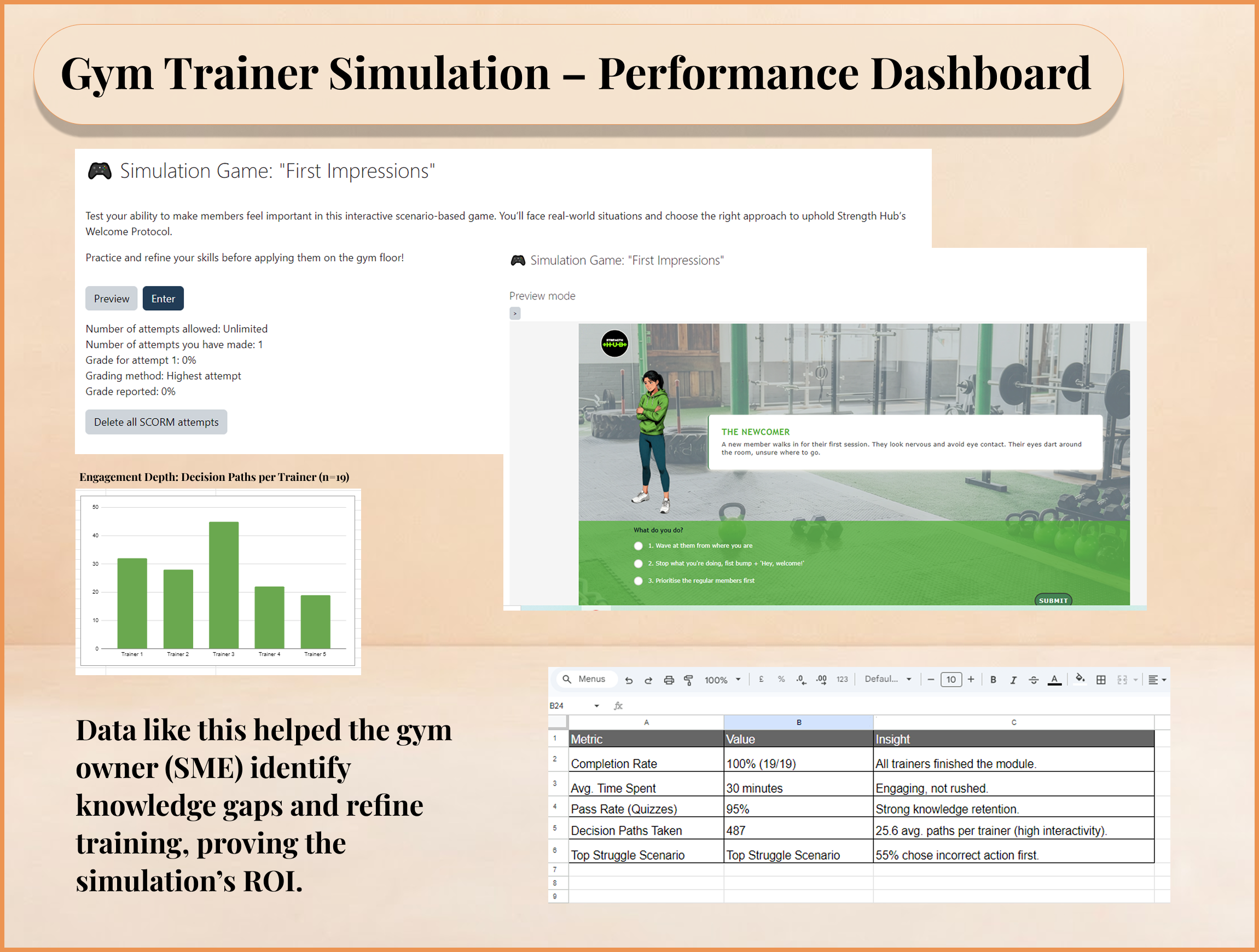
I leverage SCORM-compliant quizzes and knowledge checks to track learner progress and identify gaps. This project enabled the gym owner to refine training based on real-time data (e.g., completion rates, decision outcomes).
Methods:
- Formative assessments: Low-stakes quizzes after each scenario.
-SCORM tracking: Time spent, decision paths, and knowledge gaps.
-Immediate feedback: Explanations tied to gym policies.
Tools:
- Adobe Captivate (quizzes, variables)
- LMS (for SCORM data)
- Excel (for analysis)
AI-Powered Characters & Engaging Visuals
I use AI Vibe Coding + Canva to design diverse, relatable characters and scenarios that reflect real-world challenges. This project featured 10+ unique member personas (e.g., angry members, newbies with questions) to make training immersive and inclusive.
The style and feel of the characters were carefully chosen and imagery of the gym itself was used to reflect the culture and tone of the small business ethos.
Methods:
- AI-generated avatars (for diversity and realism).
- Canva templates for consistent branding.
- Situational variety: Conflicts, policy questions, and edge cases.
Tools:
- Canva (character design)
- AI tools (e.g., MidJourney, DALL·E)
- Adobe Captivate (integration)
.png)
.png)
Concept-Connected Project-Based Learning
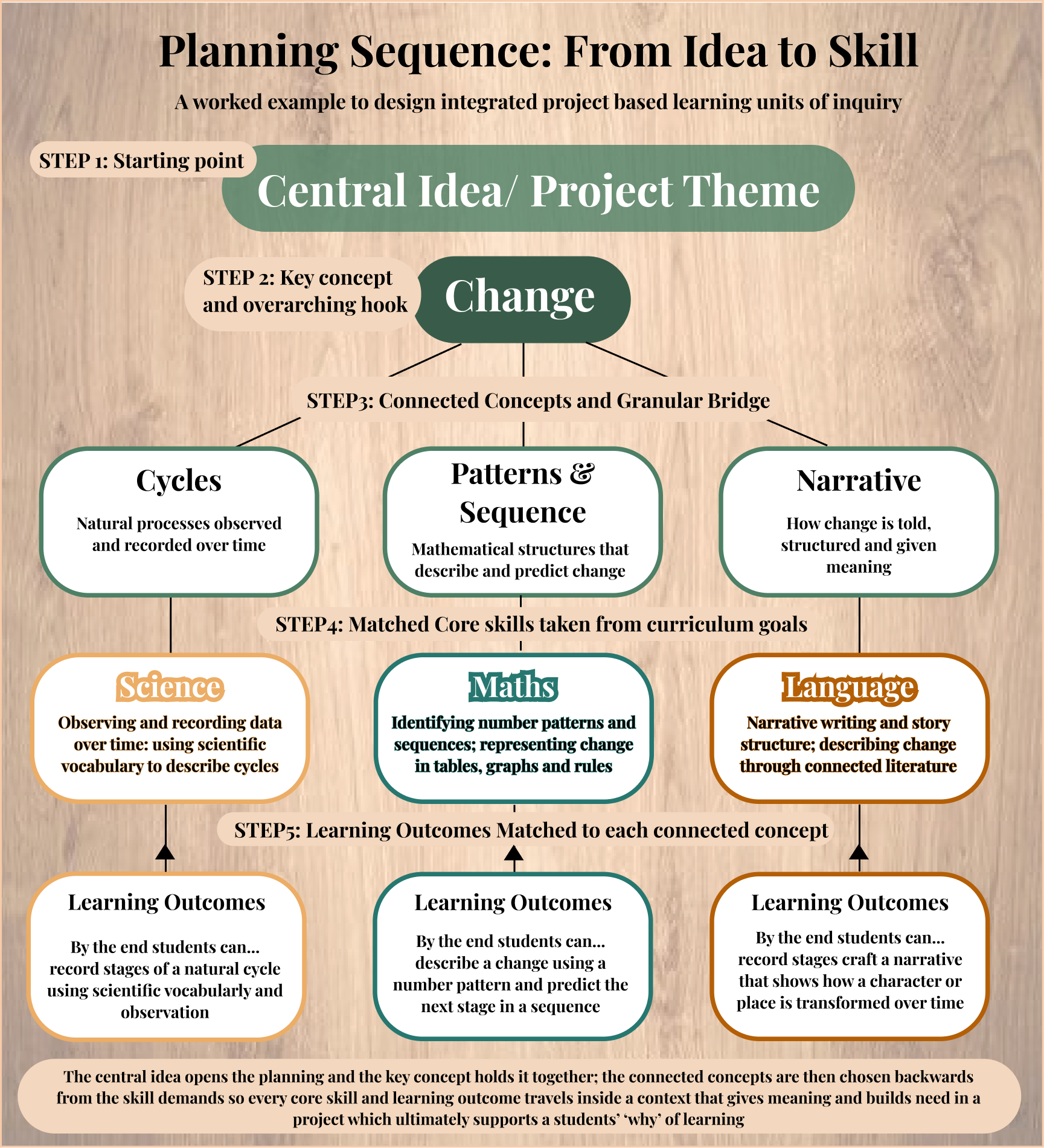
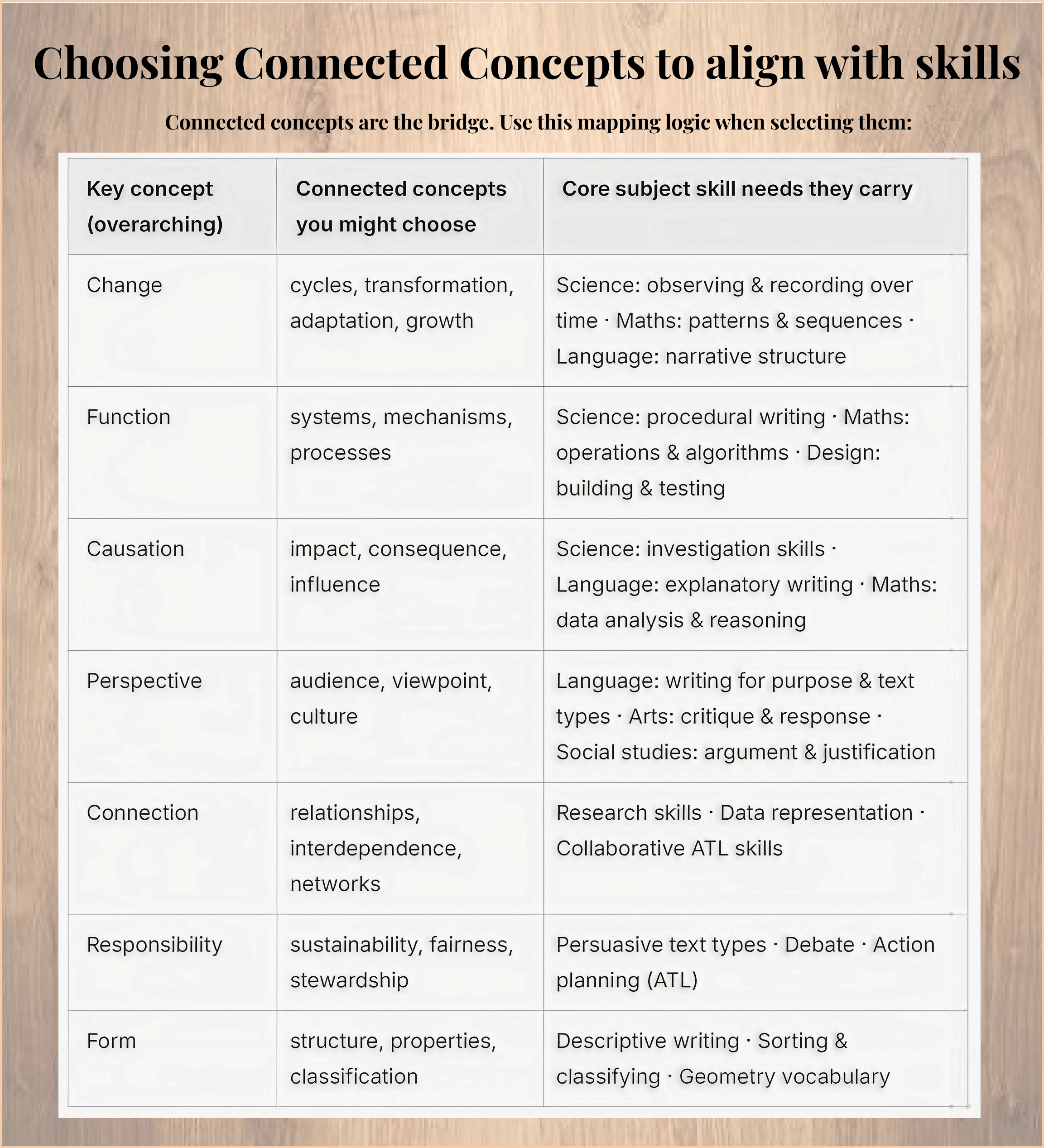
As a project-based learning practitioner, I build learning from the central idea outward, letting one guiding question shape every choice that follows. I begin with the central idea, working from the bottom up with one guiding question: what do I want my learners to know or be able to do by the end of this project?
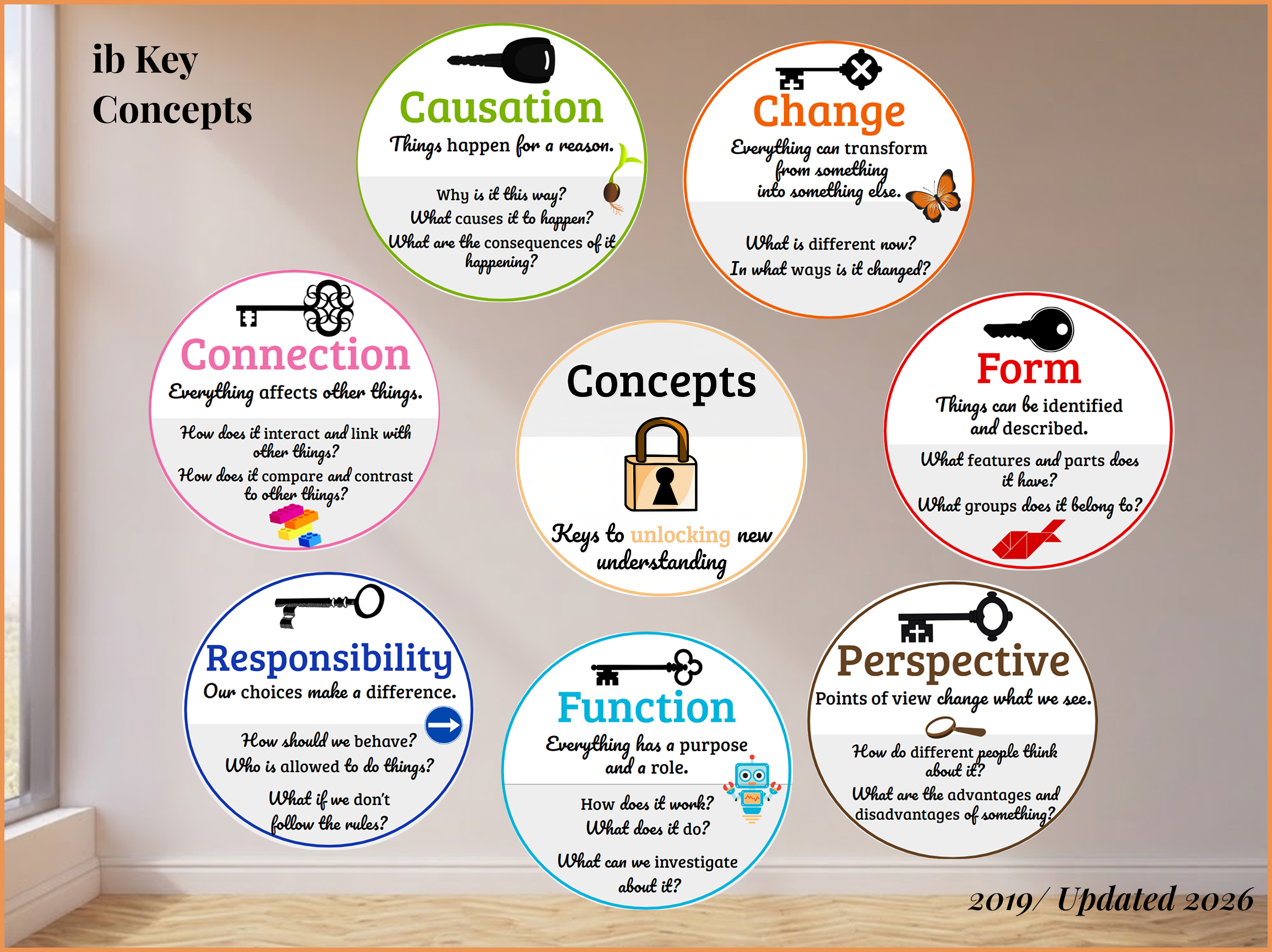
Real-world project-based approaches give me clear conceptual indicators that map the way to the specific literacy, numeracy and subject skill sets the project needs, and those needs shape everything that follows.In the IB, the seven key concepts act as an overarching hook that holds a project together and guides students towards key learning outcomes.
Connected concepts then split a key concept into a more granular focus, often with more definition towards a core subject, and they become the bridge that carries the core skill learning. That bridge keeps the project meaningful, as the skills students need travel inside situational contexts.
Methods:
Backward Concept Mapping — I read the skill demands first, then choose connected concepts that align with the key concept while carrying those exact skill needs.
Context-Driven Design — I build real-life scenarios and expert roles that genuinely require the target skills, so the learning cannot happen without them.
Student-Centred Framing — Voice, choice and ownership steer the inquiry while the conceptual frame keeps it on track.
Evidence-Centred Assessment — Formative checkpoints inside the project, drafts, artefacts, presentations, conversations, instead of separate end-of-unit tests.
Vertical & Horizontal Alignment — The same concepts deepen across phases as skill demands climb, and reach through multiple subject lenses within the year.
Tools:
IB PYP Key Concepts: Form, Function, Causation, Change, Connection, Perspective, Responsibility
Connected Concept Selection (aligned to scope-and-sequence skill needs)IB PYP Scope & Sequence: Language, Mathematics, Science
Mantle of the Expert & Contextual Simulation (Dorothy Heathcote)
Student Agency Framework: Voice, Choice, Ownership, Action
Curriculum Mapping & Standards Alignment
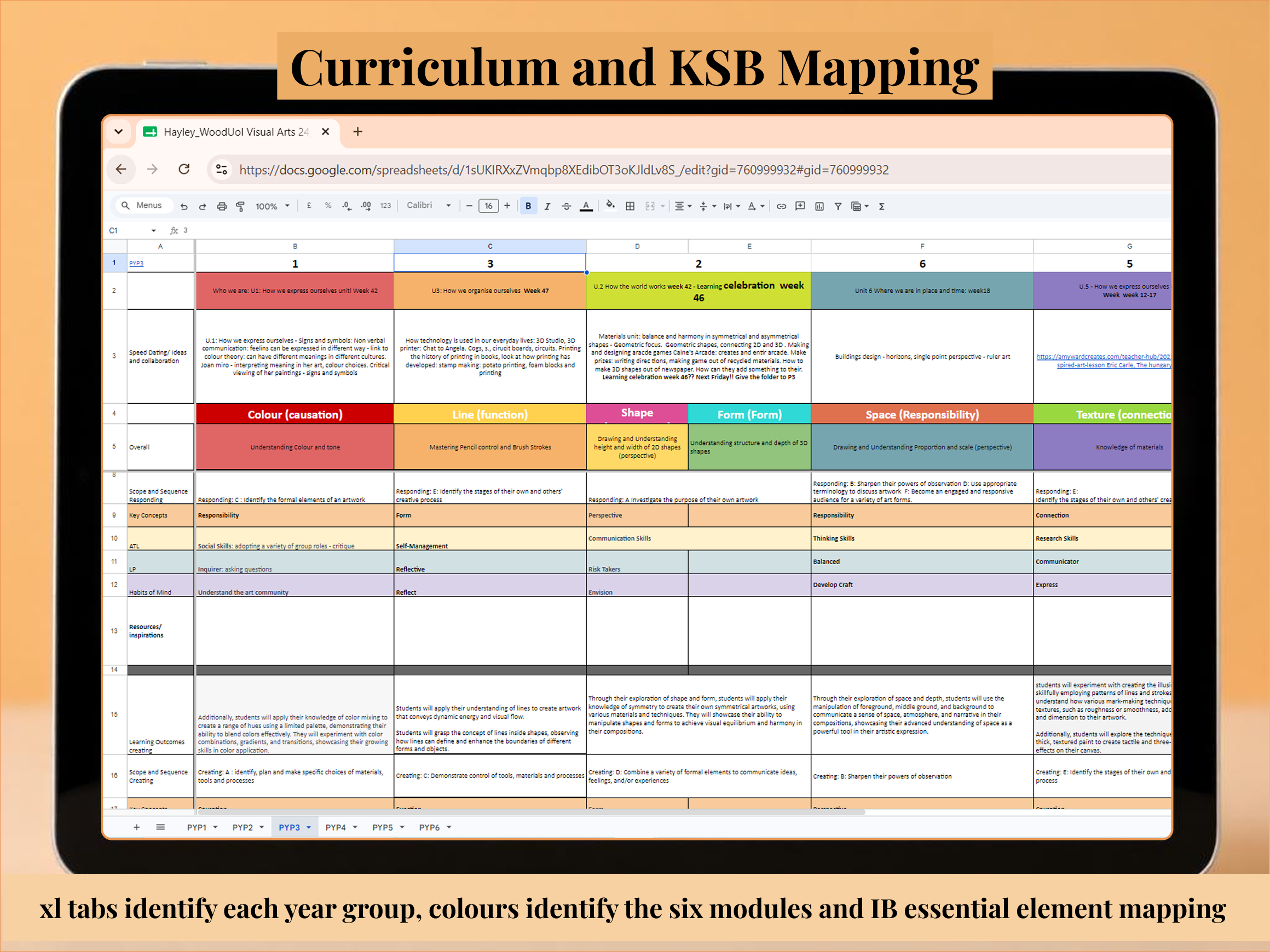
In my role as curriculum designer, I map whole school learning journeys, beginning with analysis and conversation. The essential elements of each unit of inquiry are examined collaboratively, and cross-curricular alignments surface by finding the common connections across year groups.
I set out my visual arts specialist subject curriculum as a phase map, aligned with class objectives on the understanding that prior knowledge built in the classroom, the core skills, can be integrated and aligned with the learning objectives and outcomes given in the specialist subject scope and sequence.
Through collaboration, communication and quick analysis, each module written across the school programme presented alignment with a holistic learning approach, where horizontal consistency across same-level modules and vertical progression through the year groups hold together in one map.
Methods:
KSB Mapping — Mapping knowledge, skills and behaviours to apprenticeship and qualification frameworks.
Backward Design (Wiggins & McTighe) — Starting with end-goal competencies and sequencing content logically back to foundational skills.
Gap Analysis — Identifying missing standards or skills across the mapped journey.
Vertical Alignment Tracking — Validating prerequisite chains so each stage prepares the next.
Horizontal Alignment Checks — Ensuring same-level modules hold consistent expectations across subjects.
Collaborative Design Pathways — Building the maps with teachers so alignment is shared practice, fostering innovation and agency.
Tools:
IB Scope & Sequence: Language, Mathematics, Science
KSB Essential Elements (Knowledge, Skills, Behaviours)
Backward Design framework (Wiggins & McTighe)
Excel with conditional formatting for alignment tracking
Lucidchart/Miro and Figma for visual maps
Institutional standard documents and shared drives for collaboration
.png)
Competancy-Based Assessment
I design assessment frameworks using constructive alignment, so summative assessments are never an afterthought.
Every assessment is coordinated with the curriculum goals, planned as an integral part of each iteration of the unit planning process, and together the three corners stay honest to each other.
The intended learning outcomes set the success criteria and the verbs we ask of learners, the teaching and learning activities build towards them, and the summative tasks validate the end-goal competencies through real-world application, with formative checkpoints woven through to monitor progress, so what we ask students to do in the assessment is always the thing we said we wanted them to learn.
Methods:
Constructive Alignment (Biggs) — Coordinating intended learning outcomes, teaching activities and assessment tasks, revisited during each iteration of the unit planning process.
Phased Objectives — Scaffolded progression from foundational through intermediate to advanced competencies.
Criterion-Referenced Rubrics — Objective, standards-based grading tied to Bloom's verbs and success criteria.
Formative Assessment — Quizzes, peer reviews and agentic engagement checkpoints woven through the unit to monitor progress.
Summative Assessment — Projects and performances that validate end-goal competencies through real-world application.
Assessment Blueprints — Mapping each objective to its evaluation method so nothing is assessed by accident.
Tools:
Excel and Google Sheets for rubric design and tracking
LMS platforms updated and developed, including ManageBac, Moodle and Google Classroom
Google Forms for agentic formative engagementInstitutional standard documents for compliance
Constructive alignment triangle (Biggs) as the planning reference
.png)
.png)
Measuring Learning Success
I measure the success of learning through analysis, because learning should never take place for learning's sake. The content and the need have to be real and effective.
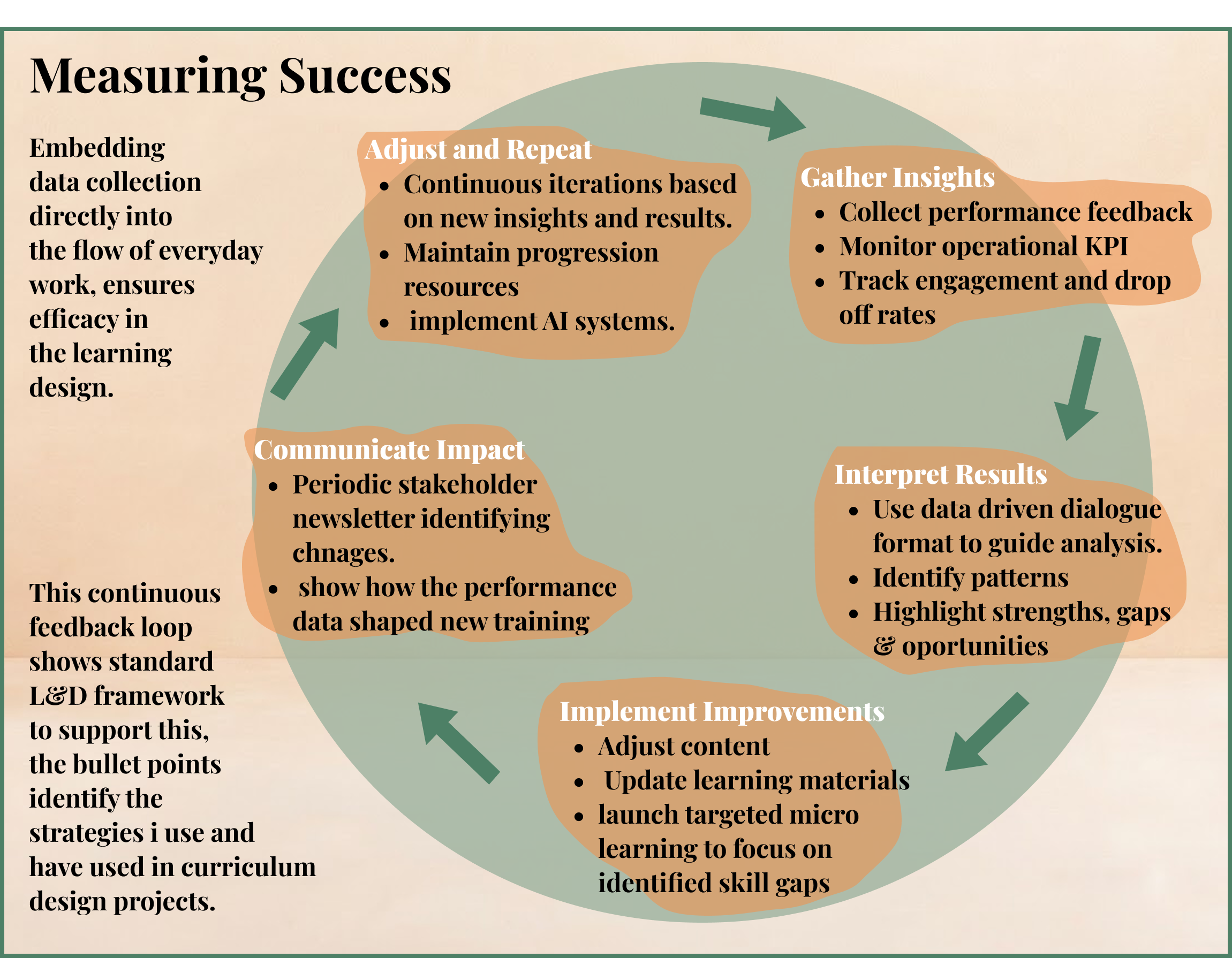
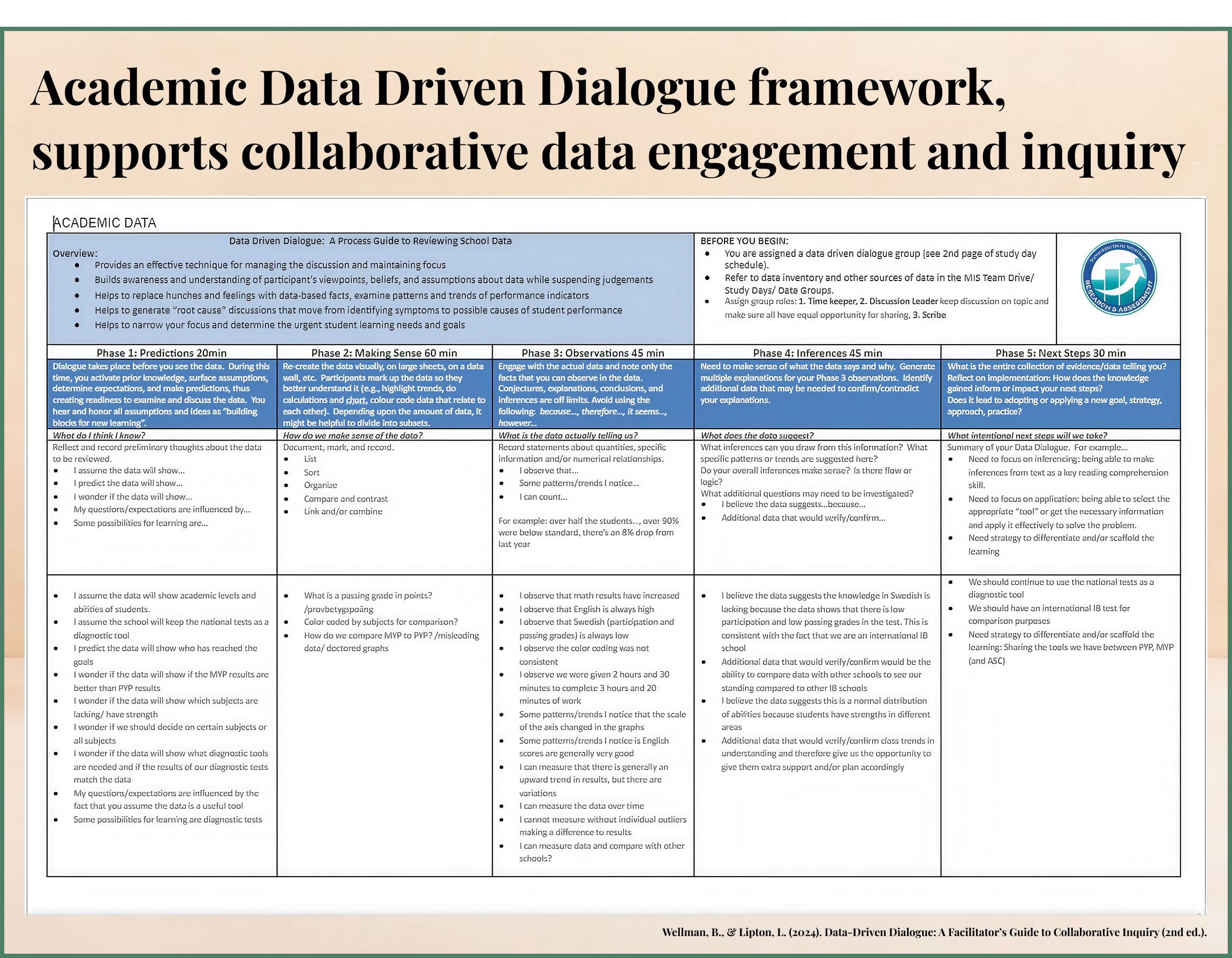
The measuring success model gives me a clear roadmap, embedding data collection into the flow of everyday work, and data-driven dialogue guides the reflection and analysis, gathering insights from performance feedback, engagement and drop-off rates so improvements land where the evidence points rather than where assumption leads.
PISA-style evaluation stretches the measurement further, from traditional knowledge-based testing towards learning approaches and skill development.
The question that matters is whether the student can use the approach in a real-life context, which takes the why of learning away from recall and progressively towards critical thought, transfer and skill application.
Methods:
Measuring Success Model — A continuous roadmap of gathering insights, interpreting results, communicating impact and implementing improvements, so the cycle keeps learning design honest.
Data-Driven Dialogue — Structured conversations around the evidence that guide reflection and analysis with colleagues and stakeholders.
PISA-Informed Evaluation — Assessing critical thought and learning approaches by asking whether students can apply them in real-life contexts.
Engagement & Drop-Off Tracking — Monitoring operational KPIs and participation signals to see where learning holds and where it slips.
Continuous Improvement Cycles — Periodic review of content and materials, with targeted interventions launched where skill gaps appear.
Stakeholder Impact Communication — Sharing how performance data shaped new training so the impact stays visible to everyone invested in it.
Tools:
Miro and whiteboards for data-driven dialogue and workshop facilitation
Shared documentation platforms, Notion, Confluence or Google Classroom
Trello board for feedback tracking
Microsoft Teams for collaboration
Performance feedback and engagement data from the flow of everyday work
Programme Design: Building Agency Through Inquiry
Approach:
I design learning programmes to build a foundation of agency, with students empowered to take their learning into their own hands.
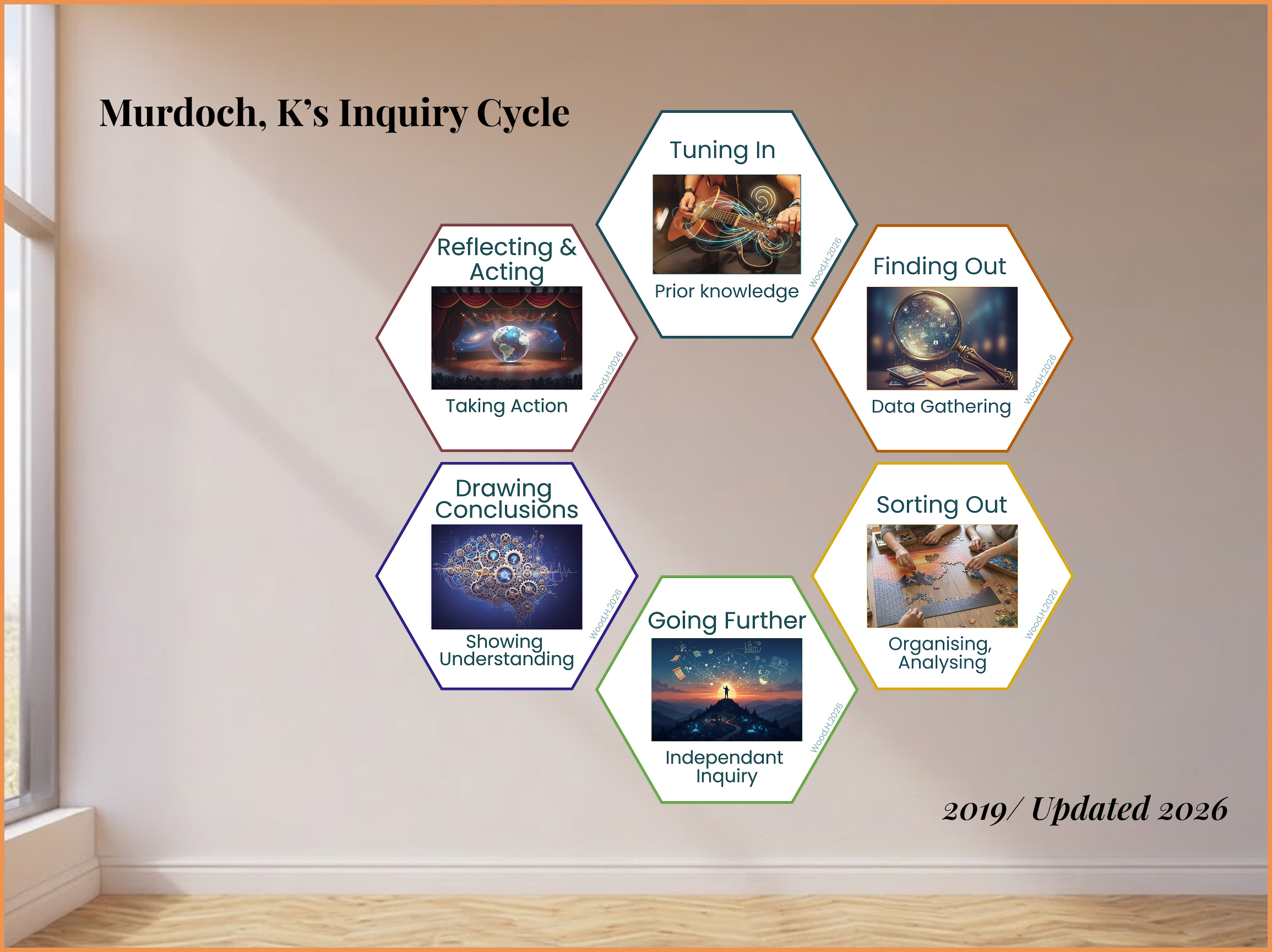
Workshops are intentionally designed to rework students' understanding of their connection to learning, making the process visible.Murdoch's Inquiry Cycle is the core framework and the spine of each project-based module.
Key formative moments are built into a student-centred format, so young people can identify the process themselves and locate their own voice within it, experiencing each stage of inquiry as something they move through rather than something done to them.
Method:
Murdoch's Inquiry Cycle — Tuning in, finding out, sorting out, going further, reflecting and acting, used as the spine of each project-based module.
Visible Learning Process — Workshops that make the process visible, reworking students' understanding of their connection to learning.
Formative Moments in a Student-Centred Format — Checkpoints placed within the cycle so students locate their own voice and identify the process themselves.
Student Agency Framework — Voice, choice and ownership built into the design so learners take their learning into their own hands.
Reflective Practice — Structured reflection so students recognise how they learn, each time they pass through the cycle.
Tools:
Murdoch's Inquiry Cycle
Project-Based Learning design
Formative assessment design
Youth voice & participation frameworks
.png)
.png)

Student-Driven Engagement: Cultivating Community and Action
Approach:
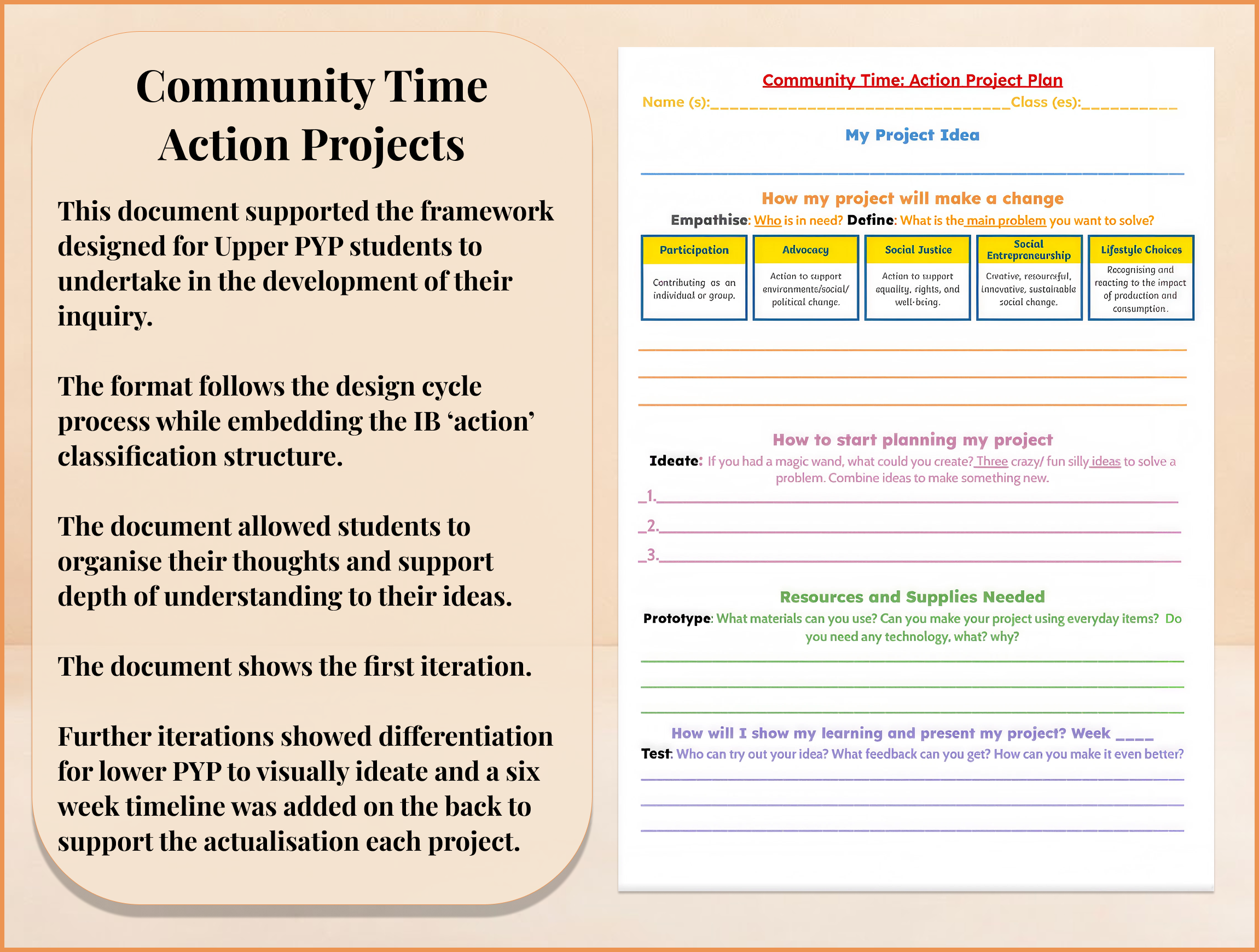
As part of a workplace culture transformation, I collaborated with cross-functional teams to redesign Community Time into a student-driven engagement framework.
Using design thinking principles, we empowered students at all levels to initiate and lead projects aligned with organizational goals and personal passions.
The framework was phased and design-cycle-based, with differentiated support so every learner could enter at their own level.
Younger students worked through visual ideation and guided brainstorming, upper PYP students acted as contributors, planning, scheduling and allocating resources for their own projects, and colleagues took the role of facilitators, with tailored frameworks supporting their programmes.
Method:
Phased Design-Cycle Process — A differentiated, design-cycle-based progression that meets each level where it is, from visual ideation to full project leadership.
Visual Ideation & Guided Brainstorming — Mind maps and storyboards giving younger students a concrete way in to shaping their own ideas.
Student Contributors — Upper PYP students taking responsibility for planning, scheduling and resource allocation within their inquiries.
Colleagues as Facilitators — Tailored frameworks handed to colleagues so the student-driven approach could run across programmes, with depth of understanding organised through the embedded IB action classification.
Iterative Framework Design — First iteration built for depth of thought, later iterations adding differentiation for lower PYP and a six-week timeline to support the actualization of each project.
Tools:
Design Thinking
Visual Ideation (mind maps, storyboards)
IB Action classification structure
Stakeholder and Cross-Departmental Collaboration
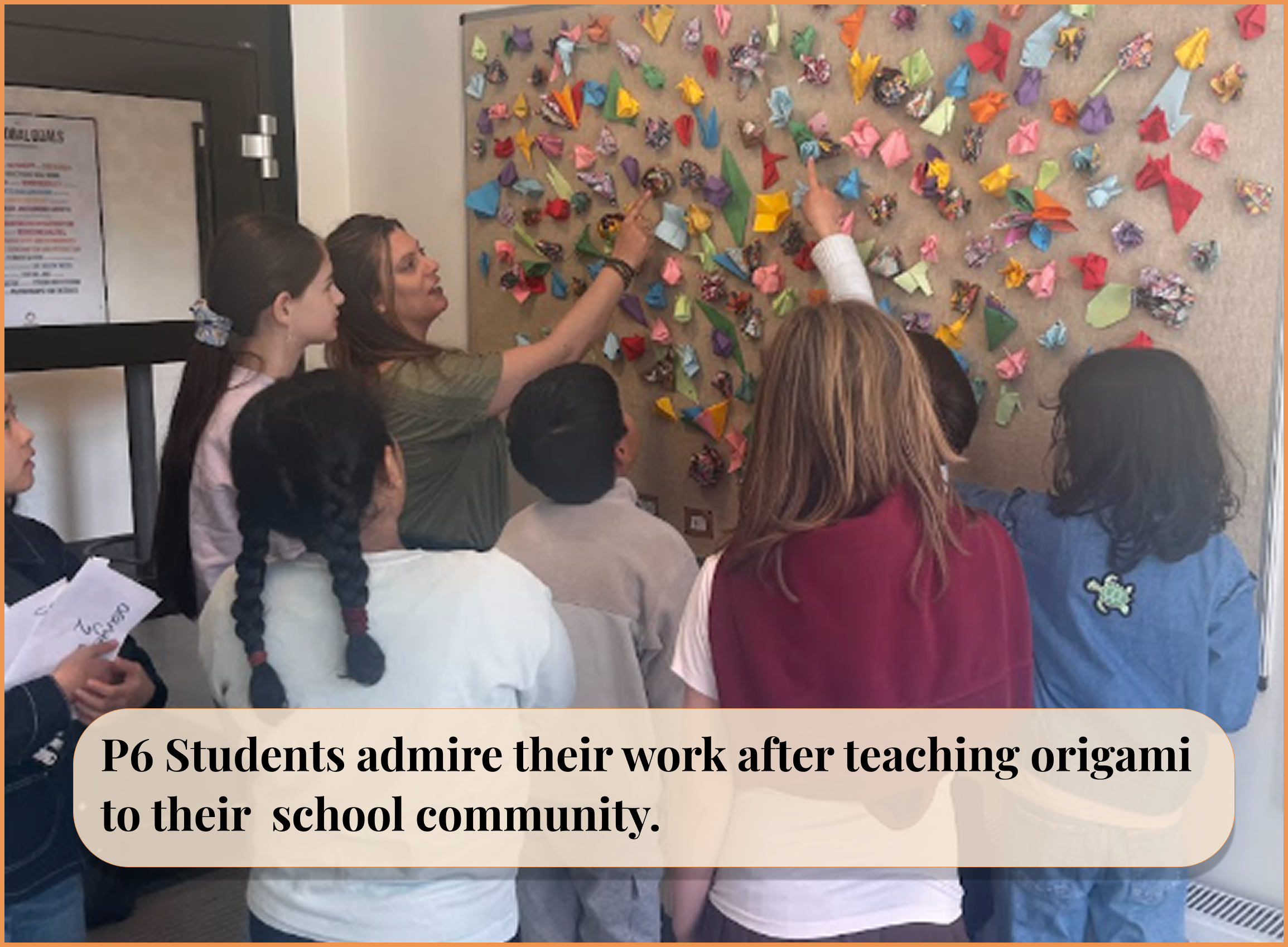
Community Art & Engagement: Willow & Paper Sculpture
Approach:
I deliver workshops that bring people together to make something larger than themselves, designing and co-creating large-scale sculptures from willow and paper.
The work began with the Something Wishful project, where I led collaborative builds of magical, large-scale forms exhibited as public installations, and it has continued through summer camps and community outreach, where each workshop becomes a fresh chance to learn how people make together.
Working with natural materials is central to the practice. Willow offers a living, forgiving structure that anyone can learn to bend and bind, and paper gives the form its skin and its colour, so participants of every age and skill level can leave a visible mark on the finished piece.
The workshops are built so the process is shared from the first knot, with groups involved in shaping the design, not only the finishing, which is what makes the final sculpture feel like it belongs to everyone who worked on it.
Method:
Collaborative Co-Creation — Designs shaped with the group rather than for them, so participants leave their mark on the finished sculpture.
Natural Material Techniques — Withy weaving, bending and binding willow, with paper skinning and layering to complete the form.
Inclusive Workshop Design — Tasks and roles differentiated so every age and skill level can contribute meaningfully to a large-scale build.
Public Exhibition & Celebration — Curating the finished sculptures as shared public work, honouring the group's achievement.
Tools:
Willow and withies
Paper and paper-mâché
Wire, binding materials and hand tools
Summer camp and community outreach programmes
Something Wishful project
.png)
Human Rights Graffiti: A Voice at the School Gate
Approach:
As Visual Arts Lead, I designed this project to give PYP6 students a political voice through their own making. To celebrate UN Children's Rights Week, they collaboratively designed and made their own stencils using the concept of negative space, inspired by the work of Banksy, then used the UN rights of the child to paint a political message onto boards displayed at the entrance of the school.The placement was part of the design.
Every student, parent and visitor walked past the work each day, so the children's message about their own rights met the whole community at the gate. The project integrated project-based learning with a real-world and visible outcome, the work was public, purposeful and entirely theirs, from the stencil cuts to the finished statement.
Methods:
Stencil Design & Negative Space (Maths alignment) — Students learnt the technique through Banksy's work, translating a concept study into their own cut stencils.
Concept-Driven Making — The UN rights of the child gave each stencil its subject, connecting art to a real political message.
Collaborative Authorship — Boards designed, cut and painted by the students as co-authors of the final statement.
Public Exhibition — The finished boards sited at the school entrance so the message met the entire community.
Tools:
Stencil cutting and spray/paint techniques
Negative space and Banksy as concept study
UN Convention on the Rights of the Child
Curriculum-integrated planning with exhibition curation
.png)
.png)
.png)
Inquiry & Climate Action: P4 The Greenland Project
Approach:
As a PYP educator, I led a six-week transdisciplinary project-based learning unit that integrated Mantle of the Expert methodologies with core data literacy.
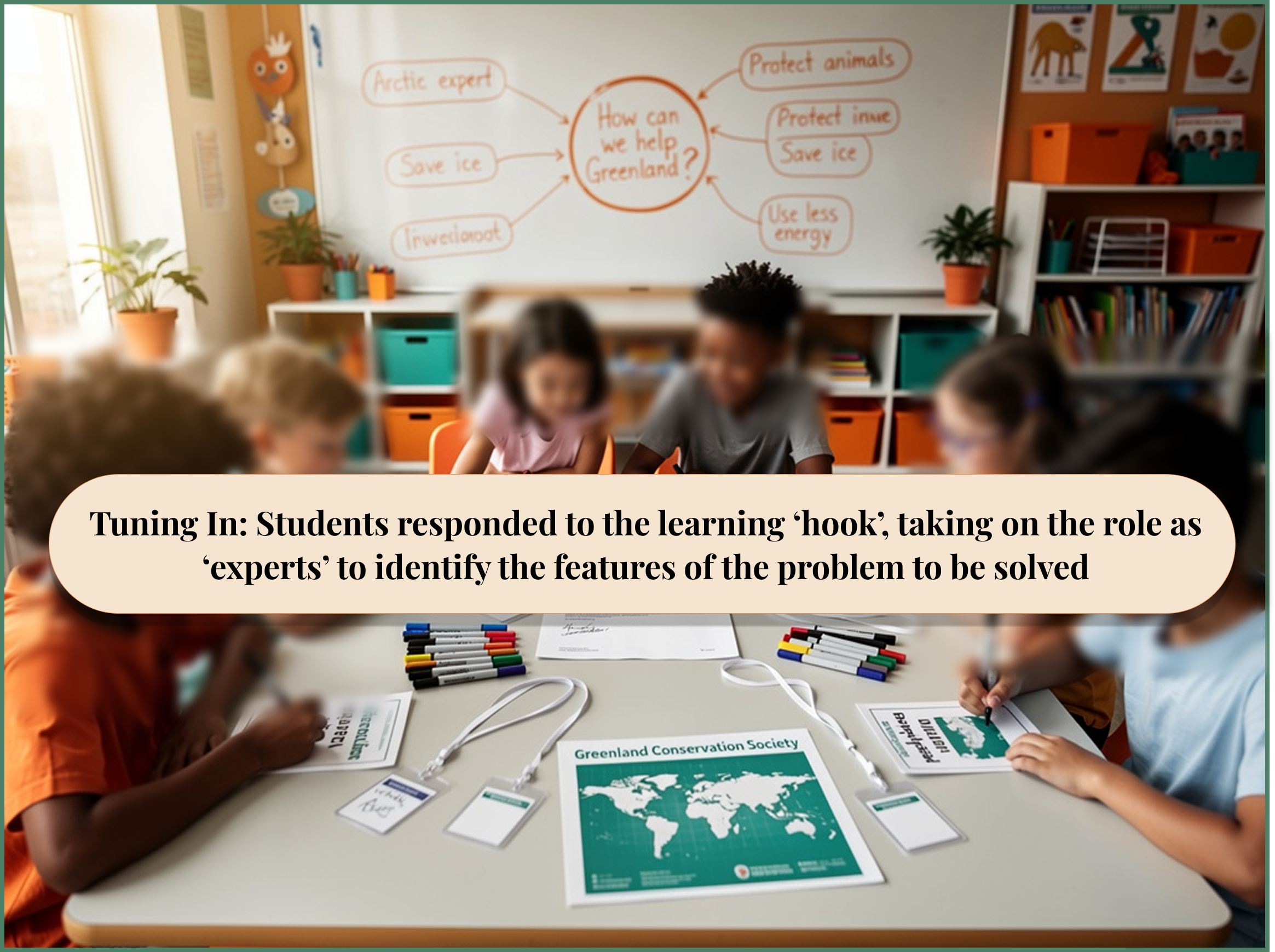
The unit opened with a dramatic provocation, a distressed letter from the Greenland Conservation Society about receding ice sheets, adressed to my class and delivered by the school administrator as a 'surprise' at the beginning of class. From that moment our classroom became The Climate Agency, with students stepping into the role of expert geographers and data consultants.
The work that followed was genuinely transdisciplinary. The students analysed environmental shifts, calculated ice melt rates and communicated ecological conclusions, and the fiction held all of it together, because as consultants responding to a real-seeming crisis, the data literacy was a job, contextualised and given real meaning.
Methods:
Mantle of the Expert (MoE) — A dramatic provocation and expert role that drive deep student agency and authentic buy-in for complex academic tasks.
Data Literacy & Scientific Inquiry — Hands-on investigation, tracking, graphing and analysing real-time variables within the simulation.
Persuasive Advocacy Literacy — Transforming scientific conclusions into impactful, communicative calls to action.
Transdisciplinary PBL Planning — A six-week unit designed so literacy, maths and science skills travelled inside one inquiry.
Tools:
Mantle of the Expert framework
IB PYP Transdisciplinary PlanningData & statistical analysis
Persuasive text scaffolding
Inquiry-based lab design
Kath Murdoch's Inquiry Cycle (tuning in, reflecting and acting)
.png)
Conflict Resolution - Forum Theatre
Approach:
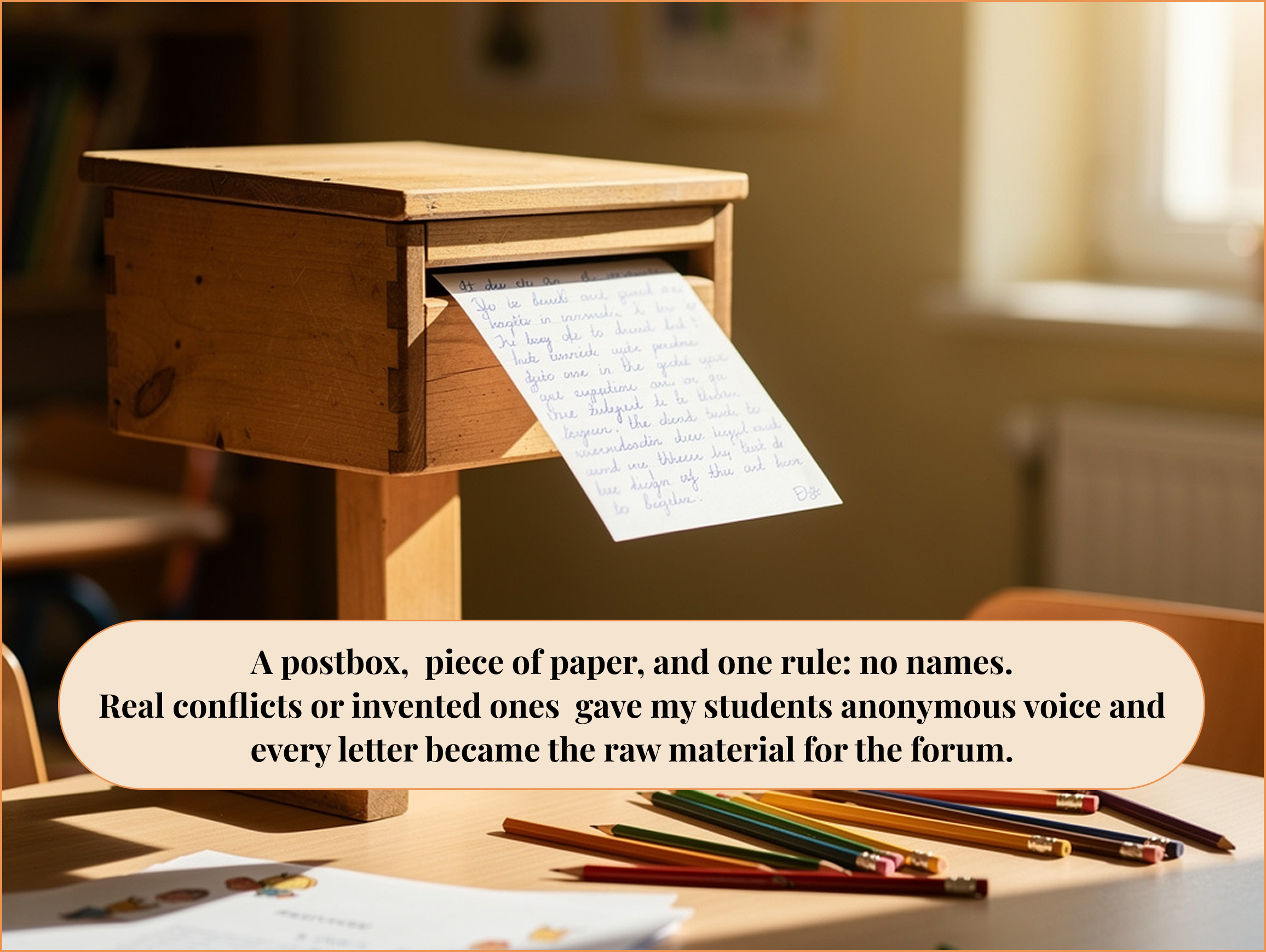
The unit began from the students' own world. Through short ideation writing tasks, they posted anonymous letters describing conflicts from their lives, or invented ideas. We had one rule, no names or identifying features so the students felt safe to share. We sorted the posts into themes and they became a student-owned map of the issues that mattered to the class.
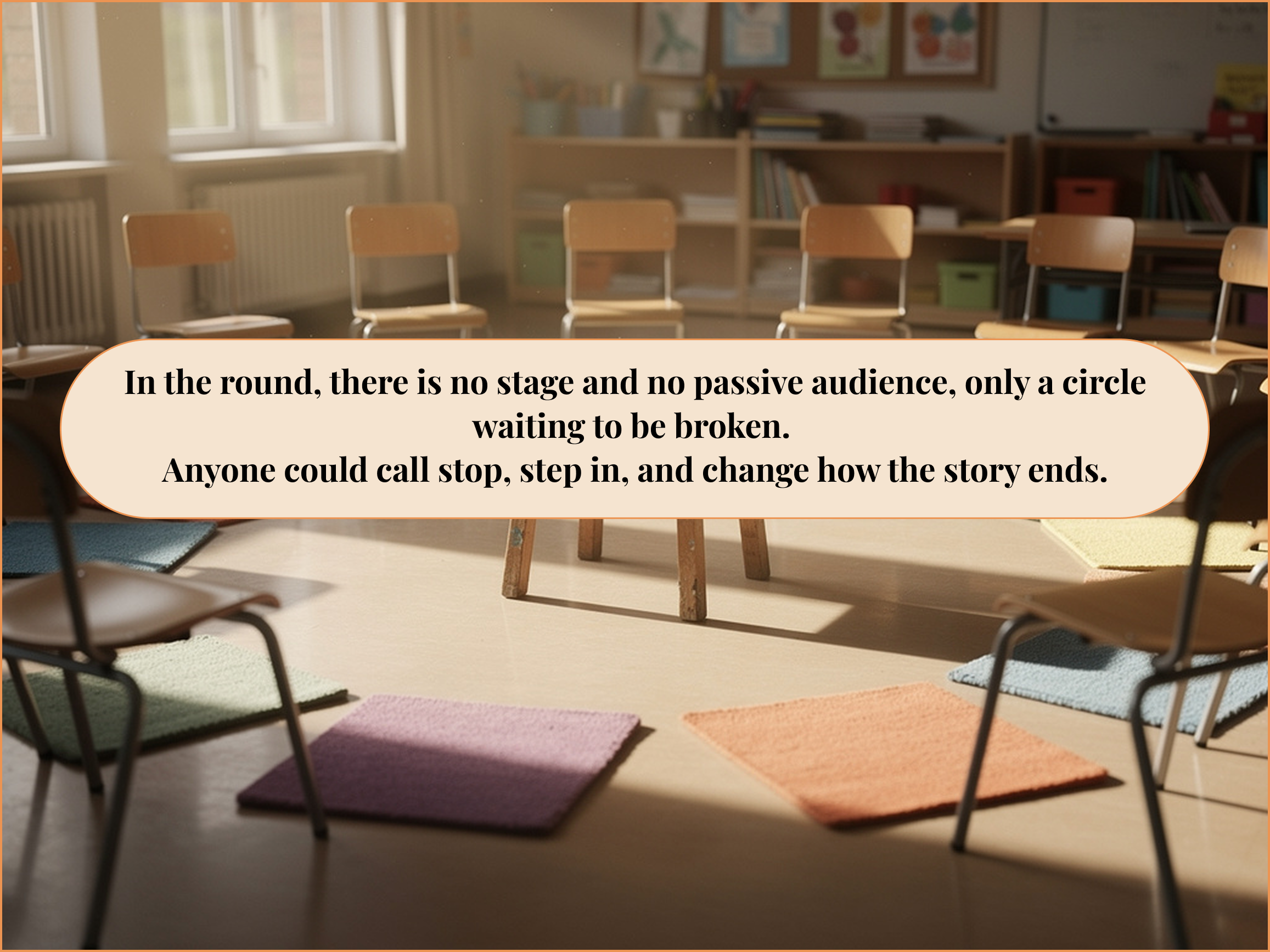
Those themes became the material for our Boal inspired Forum Theatre: short scenes performed once, then run again with the audience empowered to call stop, coaching the actors toward a different outcome, or stepping into the scene themselves.
The design aimed to help students identify problems before they became serious, and know what to do when they arose by rehearsing first in a safe space. This straetegy shows an example of how simultion in a learning space can equip studetns for the real world.
Methods:
Anonymous Ideation Writing — Short letter-writing tasks that let students surface real conflicts safely, without self-exposure or blame.
Thematic Coding — Sorting the collected conflict texts into shared themes, turning individual stories into a collective inquiry dataset.
Forum Theatre (Boal) — Performed scenes with audience intervention: spect-actors stop the action, direct the actors, or replace characters to test alternative resolutions.
Hot-Seating & Discussion — Questioning characters in role and debriefing each intervention to evaluate what worked, what didn't, and why.
Reflective Practice — Ongoing reflection connecting the rehearsed strategies back to students' own experiences and contexts.
Tools:
Theatre of the Oppressed Inspired by Augusto Boal
IB PYP Transdisciplinary Theme: Sharing the Planet
Approaches to Learning (ATL): Communication, Social, Self-Management
Student Agency Framework: Voice, Choice, Ownership and Action
Lucia Stars: Mathematics with Magic
Approach:
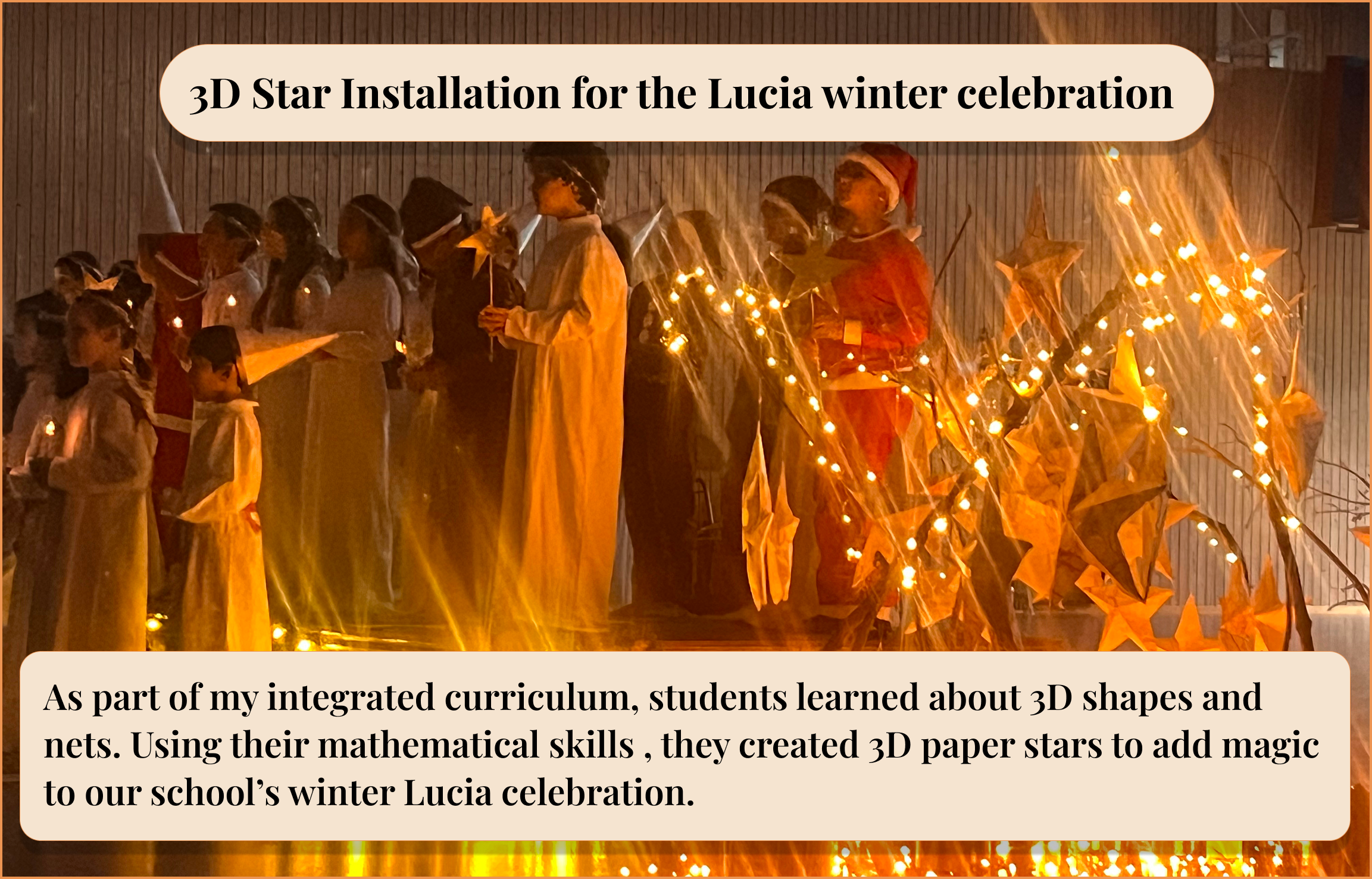
As part of my integrated curriculum, students learnt about 3D shapes and nets, then used their mathematical skills to create 3D paper stars that added magic to the school's winter Lucia celebration. The project is a small, clear example of how I work with one concept travelling through the maths and the art, with the celebration giving meaning.
Lucia is the heart of the Swedish winter, and the installation meant the students' work lit the celebration and allowed them students to feel proud of displaying their work.
The making was the assessment, folding and constructing a net correctly is the proof the geometry was understood (or not), and the finished pieces carried both skill and the wonder.
Students who excelled were encouraged to design and build their own nets. Notably, one of my students who labelled himself as "bad a math", designed and built his own dodecahedron inspired by the project.
Methods:
3D Shapes & Nets — Mathematical understanding built directly into the construction task, where a correct fold proves the geometry.
Integrated Curriculum Design — Maths and visual arts planned together, one concept, two expressions.
Festive Installation — Student work sited within the school's Lucia celebration so the outcome has a real place and moment.
Concept-Connected Making — The celebration gives the skill its context, echoing the connected-concept approach across my practice.
Tools:
Paper net construction and 3D folding techniques
Curriculum-integrated planning (mathematics and visual arts)
Swedish Lucia tradition as celebration context
Exhibition curation within school festivals
.png)
.png)
Community Engagement Materials for Collaboration
Approach:
My work in creating resourcesi begins with noticing. When a school community needs a shared structure, a common language or a clearer channel of communication, I identify the gap and design high-quality materials that fill it and serve a purpose.
Examples of my practice show, Murdoch's Inquiry Cycle hexagonal posters as the standard framework for pbl modules, shared documents and the Community Notice Board to enhance whole-school communication.
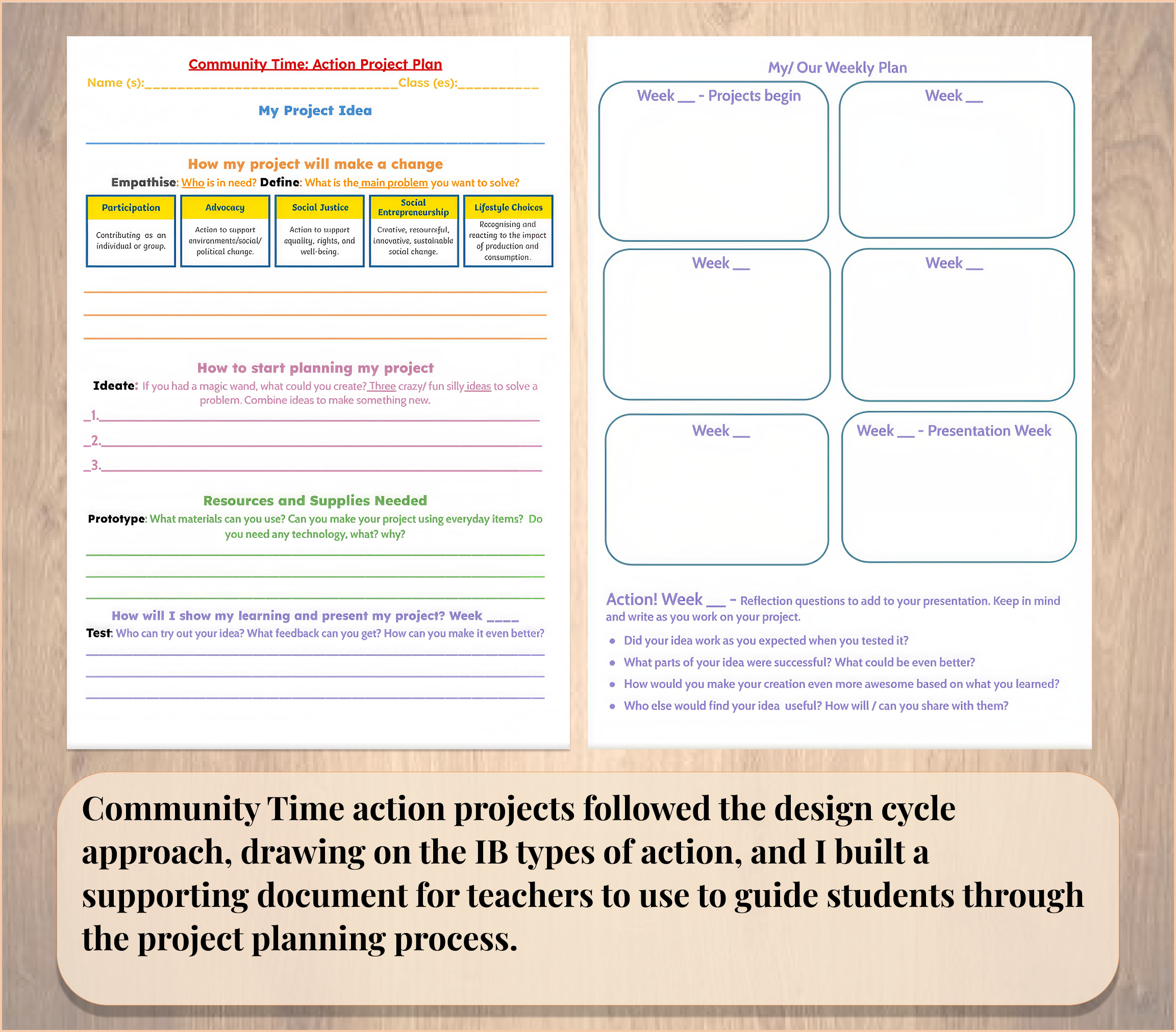
The Community Time action project process document was delivered to upper PYP and MYP students , with a plan in place to adapt the approach for lower PYP through a more visual booklet that broke the process down step by step.
Methods:
Standardised Inquiry Frameworks — Rolling out Murdoch's Inquiry Cycle as the common process across all modules, so learners meet the same stages school-wide.
Scalable Visual Resources — Designing wall-based and printed materials, hexagon stage posters and planning documents, that make the process visible at every level.
Community Notice Board — Installing a central physical channel for information sharing, keeping engagement and communication in one visible place.
Student Planning Documents — Building design-cycle project documents aligned with the IB types of action, delivered to upper PYP and MYP with differentiation planned for lower PYP.
Tools:
Framework Design
Collaborative Planning
Curriculum Design
Brand Design, Tailored Resources
Project Based Learning
.png)
Custom Learning Resources for Curriculum Alignment
Approach:
I create tailor-made learning materials to support student engagement and align with curriculum frameworks, and I design them to be multi-use, working in both print and digital formats so every learner can reach them.
The materials come from the curriculum itself. A Learner Profile for Visual Arts poster translates the ten IB attributes into the language and imagery of the art room, and formative assessment stickers, scaled down to sticker size so students can collect them in their notebooks, turn reflection into an ongoing learning dialogue.
Each resource carries the framework it serves, and each one is built to be engaged with by sticking in a book, or pointed to on the wall.
Methods:
Curriculum-Aligned Resource Design — Embedded curriculum-specific frameworks and aligned language, so each material speaks the framework it supports.
Scalable Format Design — Full-size posters scaled into sticker-sized versions for student use in notebooks, one design serving both wall and page.
Visible Frameworks for Engagement — Making learning concepts tangible and visible to enhance understanding.
Formative Assessment Tools — Sticker-based reflection resources that support learning dialogue and make progress visible to the student.
Tools:
Professional digital design software (Adobe Suite, Canva, Figma)
IB Learner Profile and PYP framework language
Print and digital multi-format production
Curriculum design and project-based learning
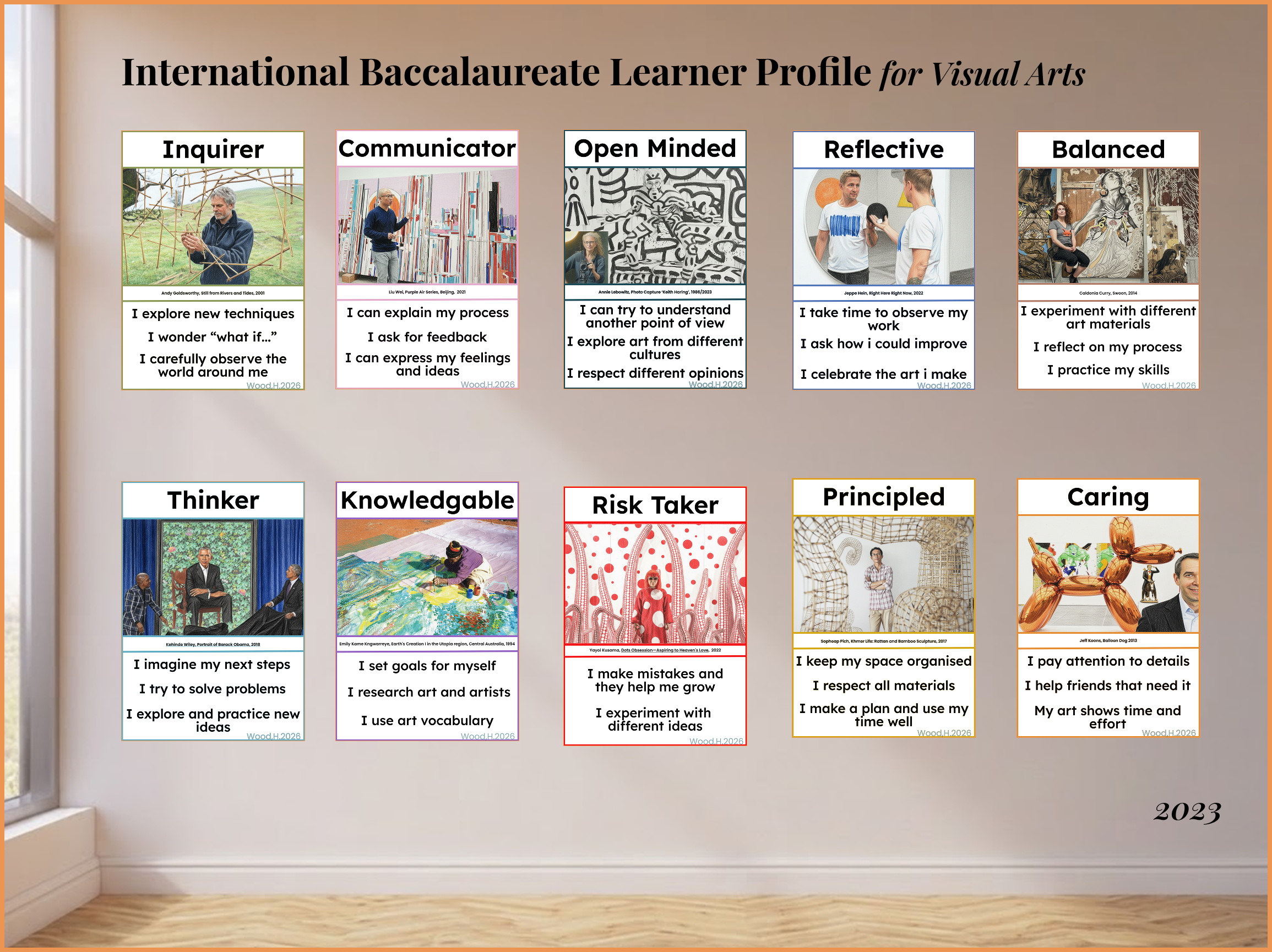
.png)
Story-Based Reading Resources: VIPERS for Inquiry
Approach:
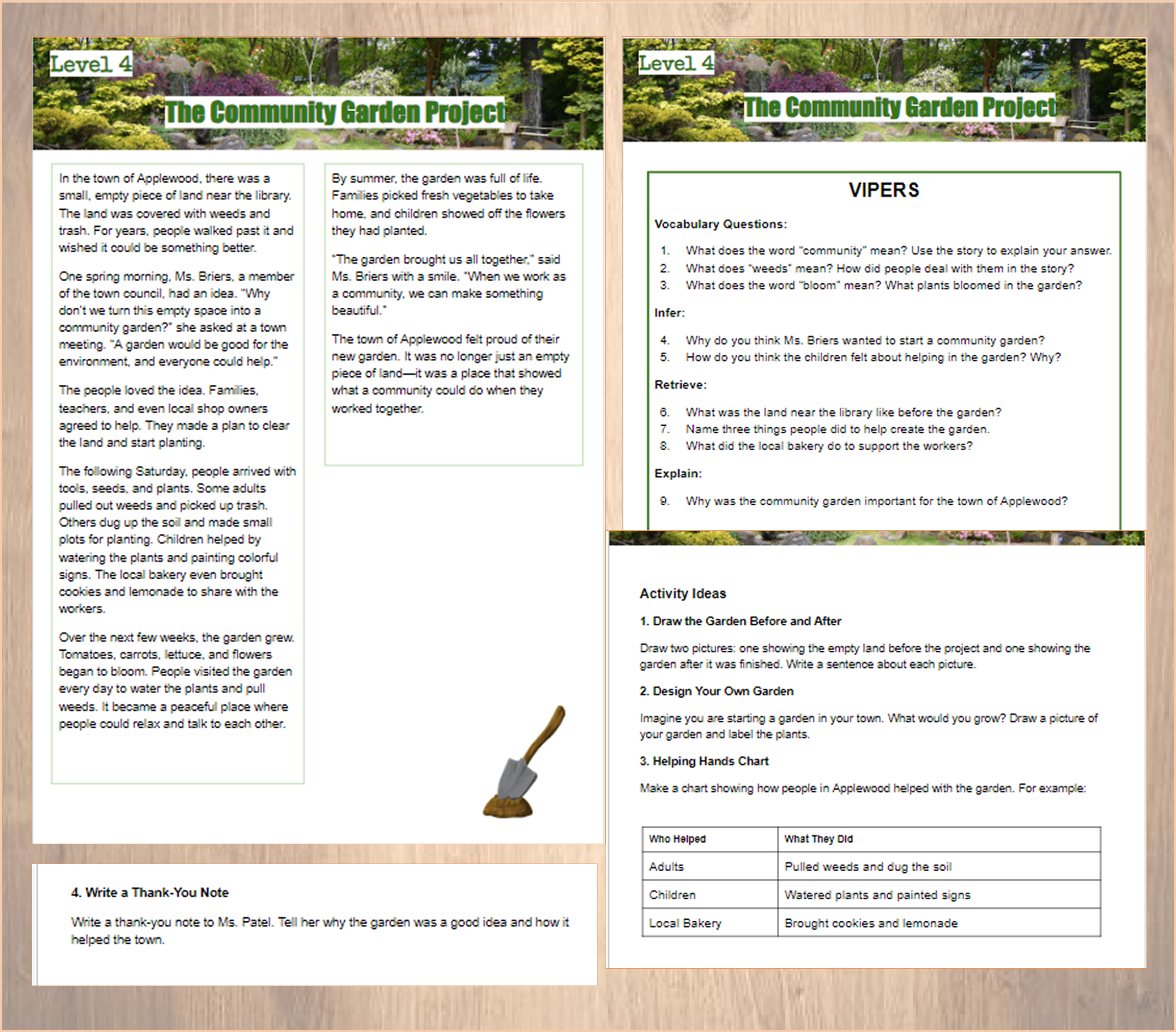
I write tailor made text and create VIPERS-inspired materials (vocabulary, inference, prediction, explanation, retrieval and sequencing), with connected activities that support reading development and engagement.
The stories and text type examples align with a central idea and unit of inquiry, and the reading journey is integrated to guide a student to analyse a text, with the ultimate goal of using that example to write their own text based on the project need.The texts are tailor-made to support transdisciplinarity.
Materials used in a unit of inquiry always follow the core skills learning outcomes, but the learning is enriched with meaning, because the text supports students in finding the right language and approaches to use in their communication as part of a project-based and inquiry-based learning approach.
Methods:
VIPERS Reading Skills — Vocabulary, Inference, Prediction, Explanation, Retrieval and Sequencing, each taught through connected activities built around the custom text.
Text as Model — Students analyse the text as a worked example, then use it as the scaffold for writing their own text based on the project need.
Transdisciplinary Text Design — Stories written to align with the central idea and unit of inquiry, so reading serves the wider project rather than sitting beside it.
Core Skills Alignment — Every material follows the core skills learning outcomes, with the inquiry adding meaning and motivation.
Reading Engagement — Purpose-written stories that give reluctant readers a reason in, the text matters to the project they are living in.
Tools:
VIPERS reading framework
Custom story and text type writing
Central idea and unit of inquiry alignment
Core skills learning outcomes and scope and sequence
Project-based and inquiry-based learning design
.png)
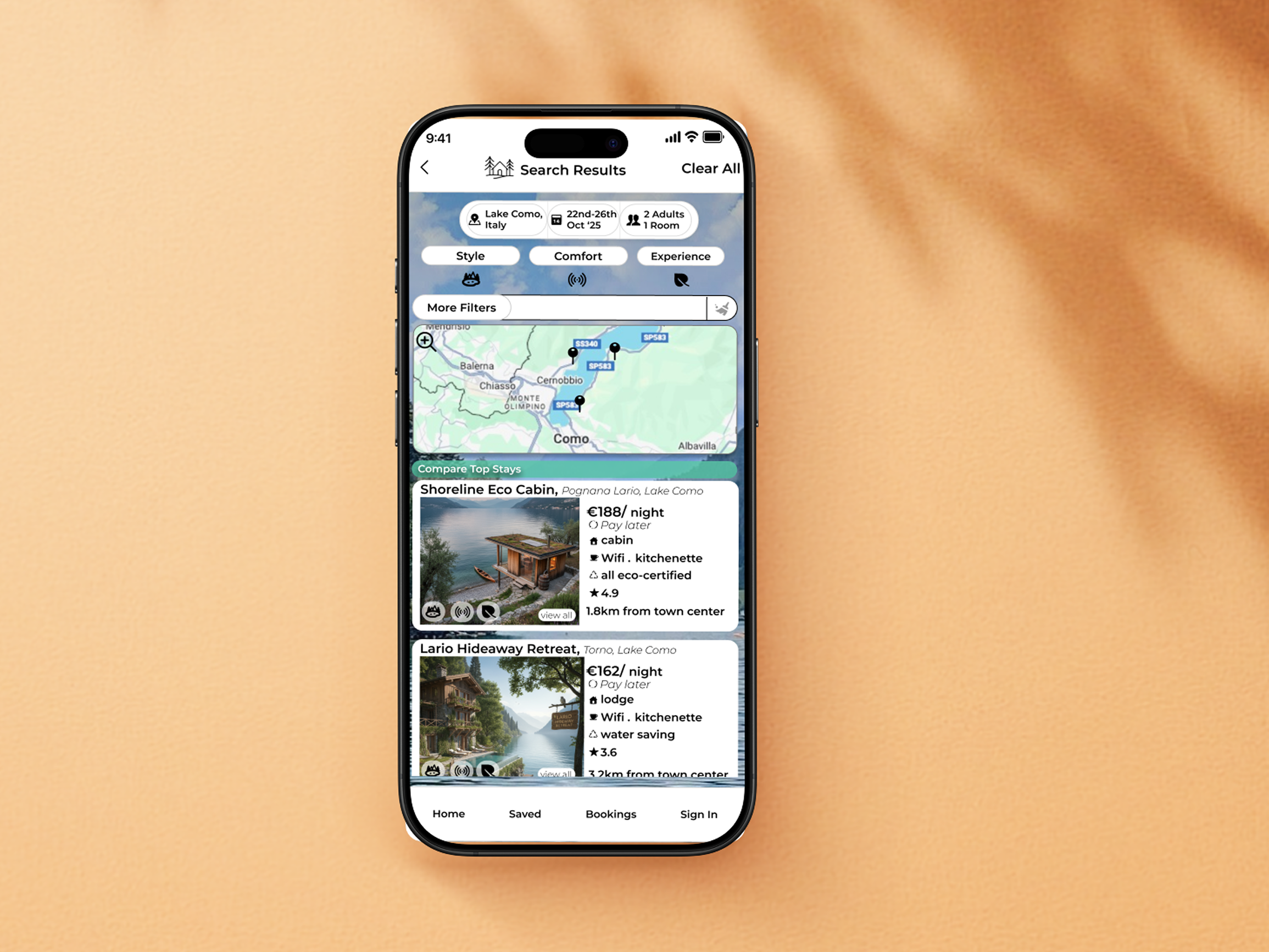
Woodland Hygge Hotel Booking Platform - Building an App with a UX design approach.
Tasked with designing a nature-inspired hotel booking platform for a small business—an industry entirely new to me—I worked through the full UX design cycle: from research and analysis to design and prototyping, delivering a testable mid-to-high fidelity Figma prototype.
The project demonstrates my ability to apply a structured, evidence-led design process in an unfamiliar domain, and to translate business needs and user insights into a product ready for engineering handoff.
01 - Research & Discovery
Approach:
My prior experience in hospitality has been on the service side, so I needed to understand both the market and the user before designing anything.
My approach was to combine top-down market analysis with bottom-up user research, benchmarking competitors to identify where existing platforms excel and where friction reduces user return, while gathering first-hand insights from real users to uncover pain points and unmet needs. This ensured the project was grounded in evidence rather than assumptions.
Methods:
Competitive benchmarking — analysing established hotel booking platforms to identify strengths, weaknesses, and gaps in the user experience that served as friction and reduced user return.
User questionnaires — distributing structured questionnaires to capture quantitative data on booking behaviours, preferences, and priorities across a broader audience.
User interviews — conducting one-to-one interviews to dig deeper into the why behind user behaviours, exploring emotional context, motivations, and frustrations that questionnaires alone couldn't reveal.
Impact:
• ToolsMiro (research synthesis & benchmarking slide deck)
• Google Forms (questionnaires)
• Interview guides & recordings
.png)
.png)
02 - Analyse & Define
Approach:
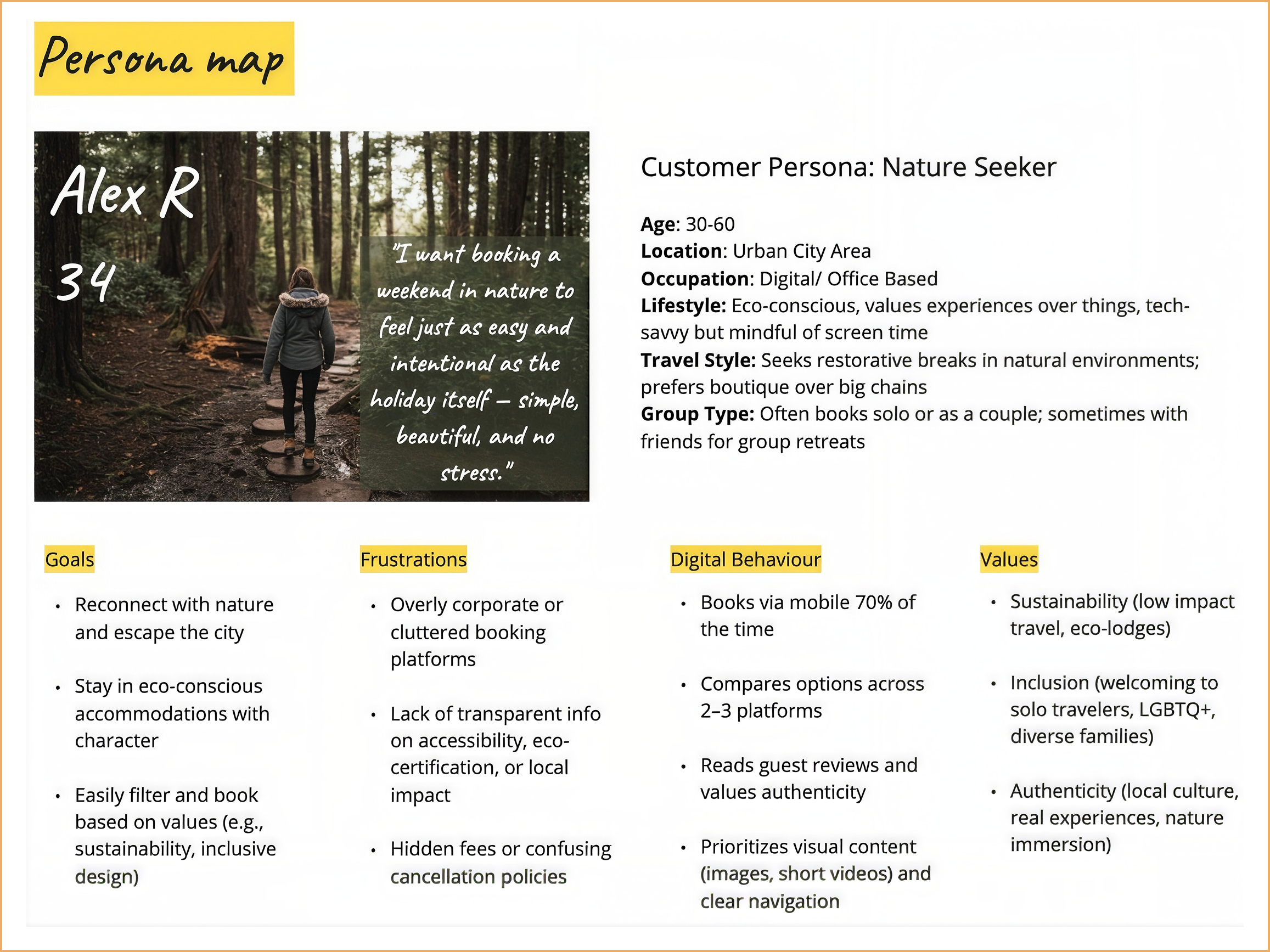
Raw research now in hand, the challenge was to make sense of it all. My approach was to synthesise the questionnaire, interview, and benchmarking data into a clear picture of who I was designing for and what mattered most to them.
By leading affinity mapping workshops, I clustered findings into meaningful themes, then translated those themes into user personas and journey maps, ensuring every design decision downstream was anchored in real user needs rather than assumptions. This defined the problem clearly and set the direction for ideation.
Methods:
Affinity mapping workshops — leading collaborative sessions to cluster research findings into themes, surfacing patterns in user pain points, motivations, and behaviours.
User persona profiles — designing evidence-based personas to represent key user segments, giving the project a clear "who" to design for and a shared reference point for decisions.
Empathy mapping — mapping what users think, feel, say, and do to build deeper emotional understanding and uncover friction the raw data alone didn't show.
Impact:
• ToolsMiro (research synthesis & benchmarking slide deck)
• Google Forms (questionnaires)
• Interview guides & recordings
.png)
03 - Ideate & Design
Approach:
With personas and journey maps defining the problem, my approach was to design the most direct, friction-free path a user would take through the app.
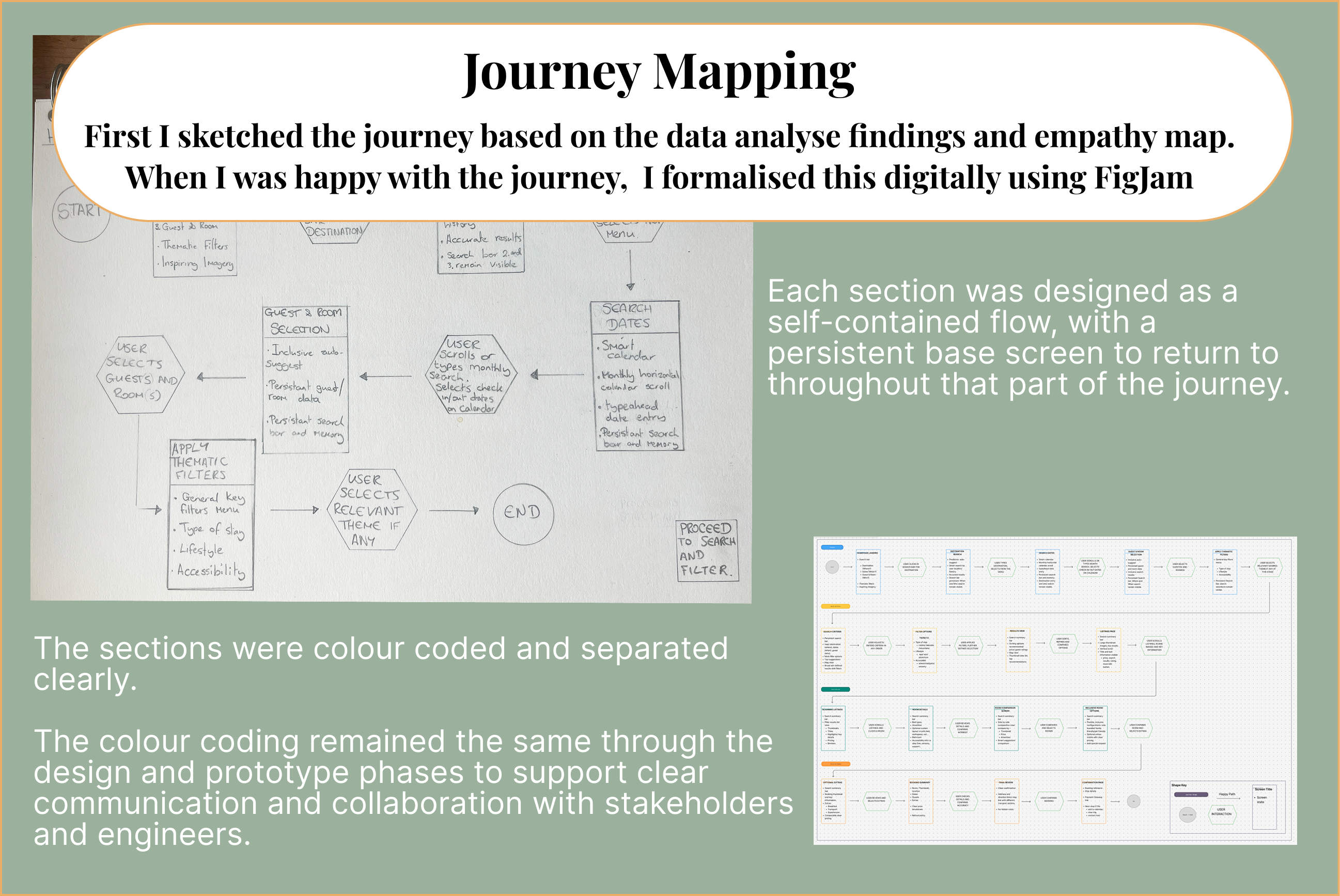
Before touching any design tool, I focused on structure first: sketching out the user flow and identifying the content and actions needed at each step.
This ensured the experience was logical and complete before any visual design began. Once the flow held up, I digitised it in Figjam, creating a clear, structured foundation that would guide the prototype.
Methods:
Journey mapping — designing and mapping the most direct path a user would take on the app, from discovery to booking, ensuring each step moved the user closer to their goal.
Sketching & annotation — sketching out screens by hand and identifying the content and actions required at each step, keeping the focus on structure and purpose over polish.
Flow digitisation — translating the validated sketches into a structured digital flow in Miro, creating a clear reference that would guide prototyping and stakeholder discussions.
Impact:
• Miro & Figjam (user flow mapping & digitisation)
• Pen & paper (sketching)
• Persona & journey references
.png)
Mobile Banking Platform UI
Challenge
New banking company needed a UI that felt trustworthy for financial services while being engaging and approachable to attract modern users.
Solution
Created a responsive design system with cross-device adaptability, biometric authentication, and WCAG compliance. Built wireframes and prototypes in Figma.
Impact
Built to drive higher user engagement and faster onboarding through responsive design, biometric security, and WCAG-compliant accessibility.
.png)
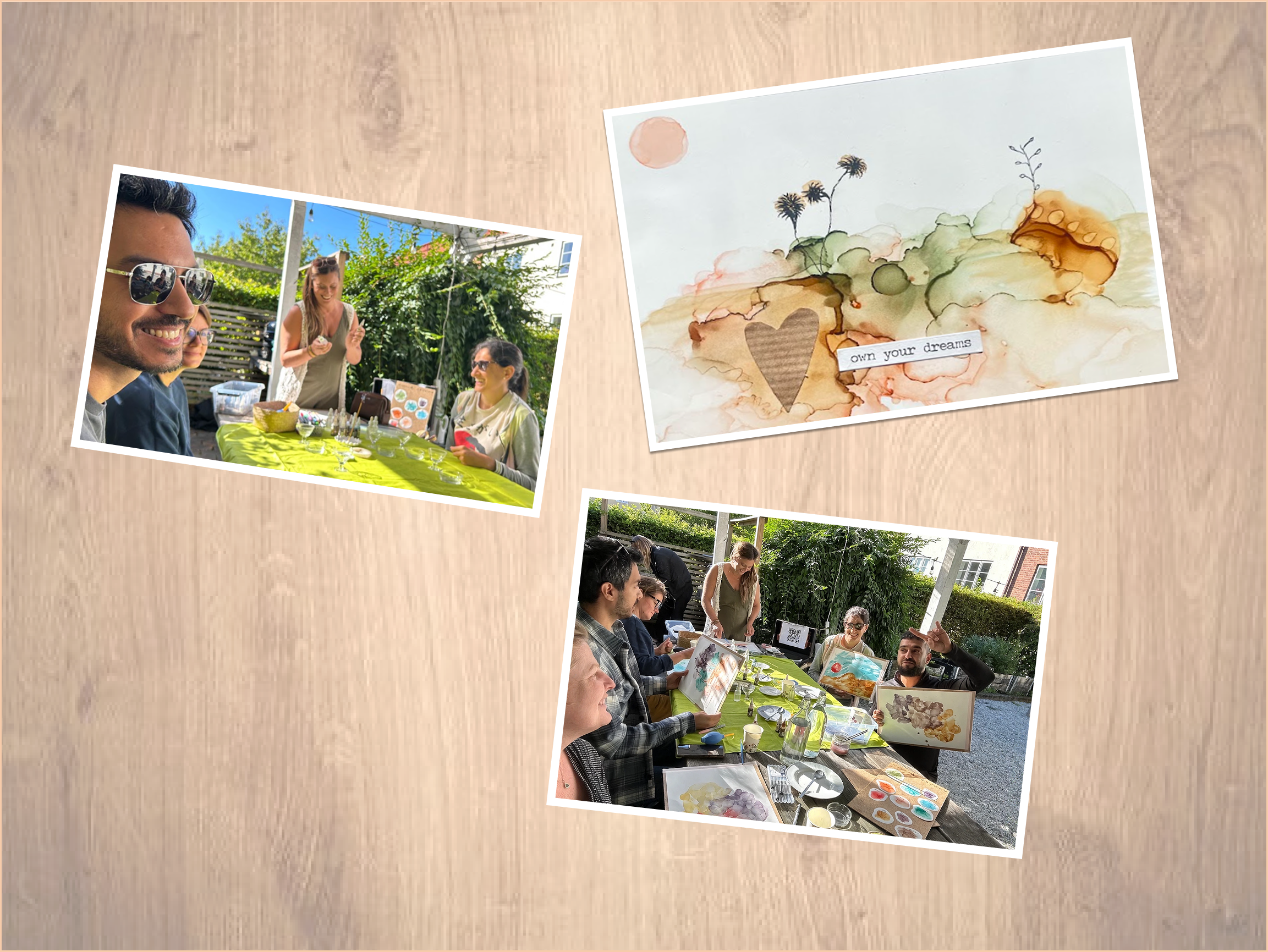
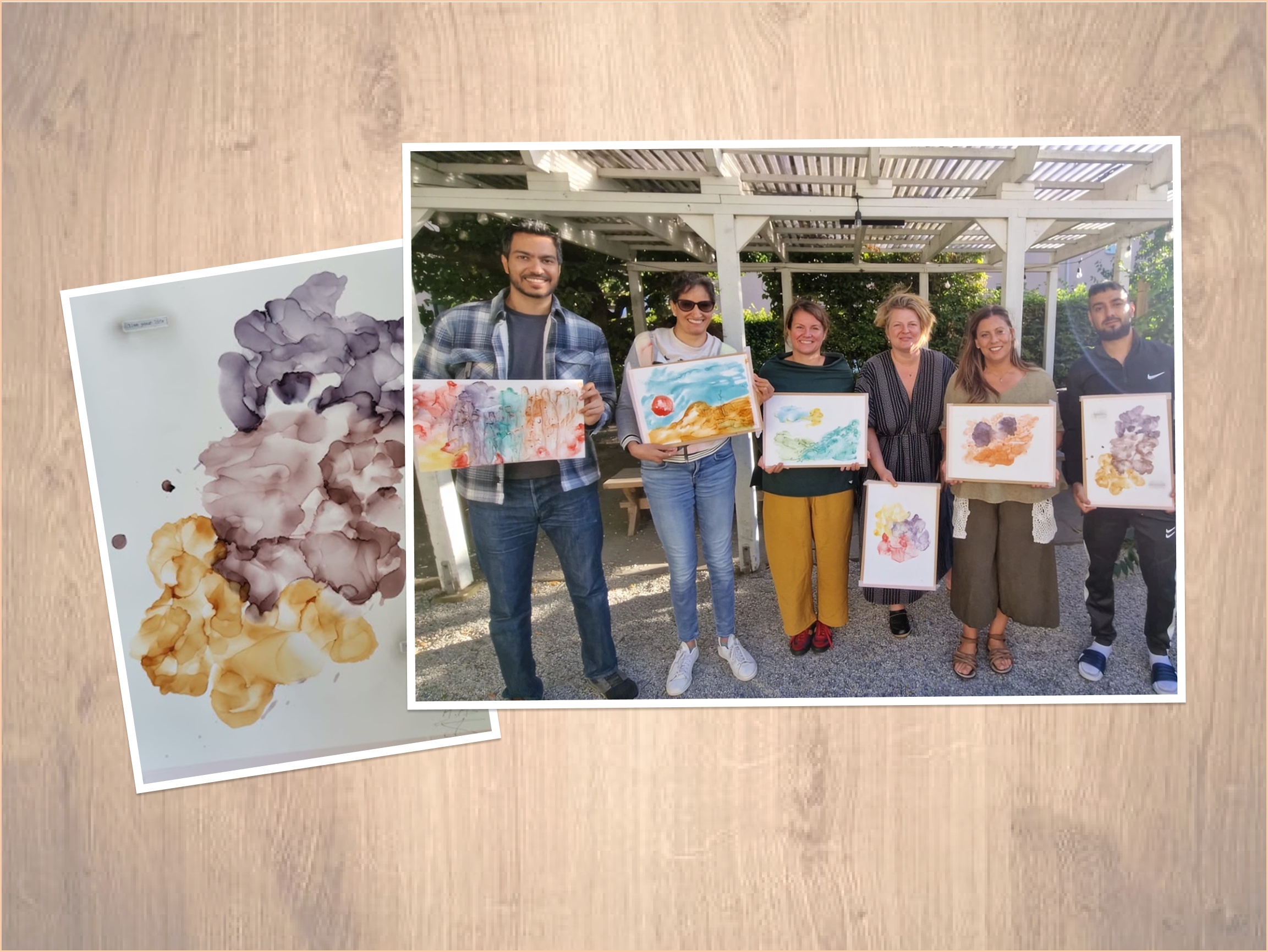
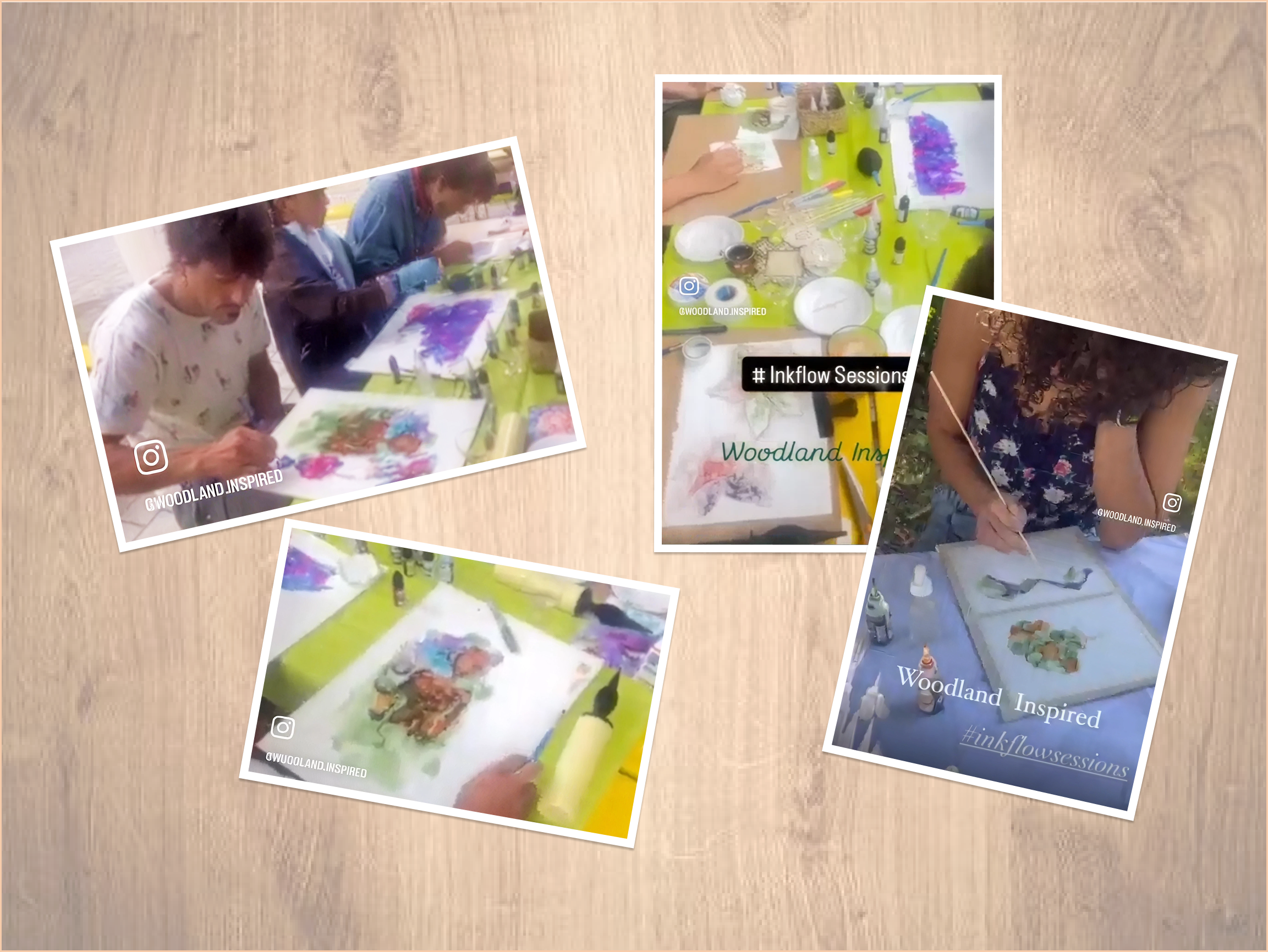
Ink Flow Sessions
Adult learners — particularly those who don't consider themselves "creative" — often arrive to creative practices holding tension, self-judgement, and the need for control. Traditional art instruction, focused on technique and outcomes, can deepen this resistance rather than release it. There was a need for a workshop where the goal isn't the artwork, but the state of being that making it invites: calm, presence, and surrender to process.
Approach
Inquiry-based and process-led. Rather than teaching participants to control the medium, sessions are structured as a series of gentle guiding questions — What happens if I breathe before I begin? What does the ink want to do? What can I notice when I stop steering? Each stage of the session (breath, intention, tea, creation) builds on the last, allowing calm to accumulate naturally. The medium itself becomes the teacher: because ink and water cannot be fully controlled, participants practice collaboration over command — learning to respond, adapt, and let go in real time.
Method
Sessions flow through four intentional stages:Breathwork & intention setting — grounding the group, slowing the nervous system, and setting a personal (non-outcome) intention.Guided practice — short explorations where participants observe how the medium behaves, building trust in the process before the final piece.Herbal tea break — teas brewed with respiratory-supportive herbs, offering a moment of stillness and reflection before the final creation.Final canvas — each participant chooses their canvas and creates with the ink, applying everything the earlier stages cultivated.Held in small groups (10–15 participants) at summer festivals and corporate wellbeing programmes, ensuring personal attention and a safe, non-judgemental space.
Tools
Breathwork and mindfulness
facilitation
Inquiry-based prompts and reflective questioning
Intuitive fluid media (ink, water) that "collaborate" with the creator
Herbal tea rituals for reflection and clear breathing
Small-group container (max 10–15) for personalised support
Impact
Participants — including those who arrived saying "I'm not creative" — report a genuine shift: reduced stress, visible relaxation, and a renewed sense of creative agency.
The lasting learning is transferable beyond the workshop: how to meet uncertainty without gripping, respond rather than control, and find calm within process. Many describe the experience not as an art class, but as a wellbeing practice that happens to leave them with a canvas.